- Published on
- Great American music still booms out of the state, even if great American cars don’t.
- There is an art museum in Detroit that people should see and know about.
- The right can be rabid there.
- Don’t drink the water in Flint.
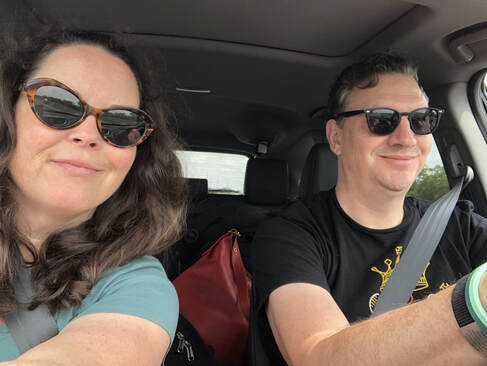
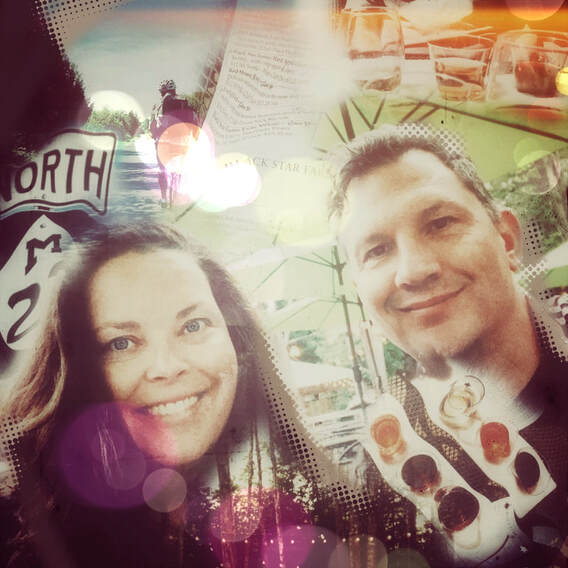
The author and his better half. On the road again.
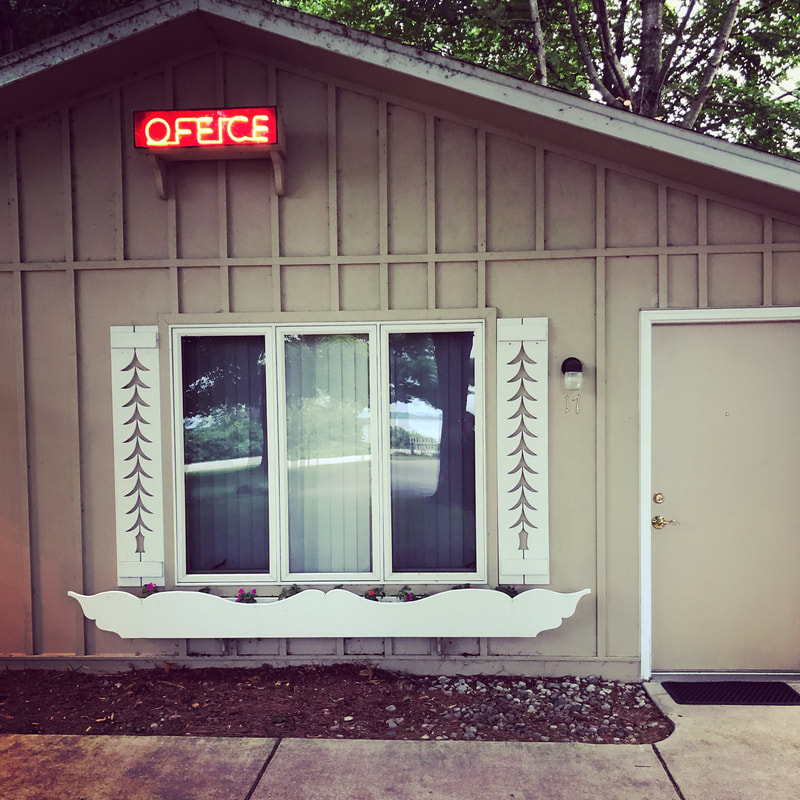
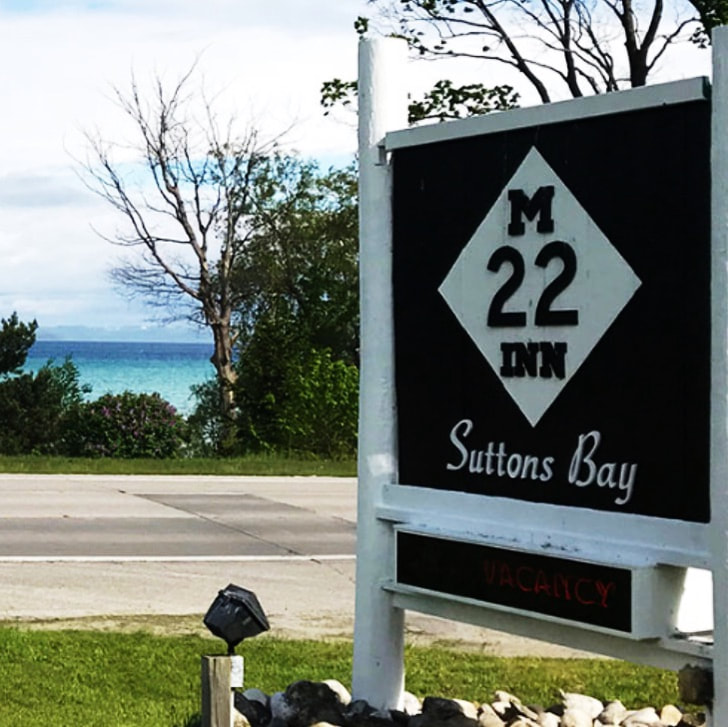
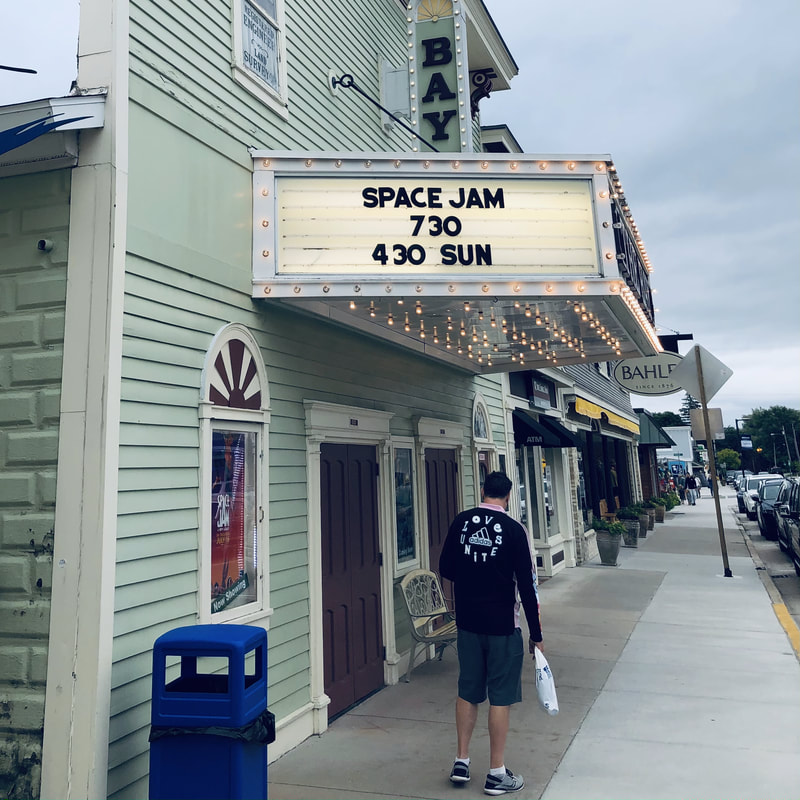
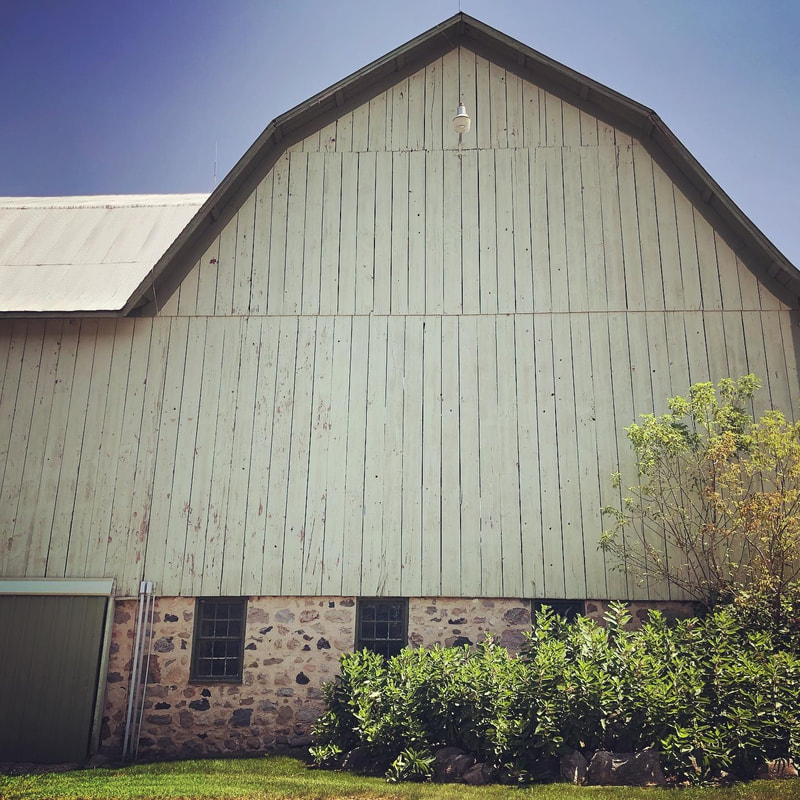
Suttons Bay felt like the kind of resort town one might find in Maine, only "unsalted" and sans lobster. There was a small, colorful strip filled with restaurants, coffee and souvenir shops, and a small theater all promoting the idea that life was different on the M22 -- the state highway that followed the coast of Lake Michigan along the Leelanau Peninsula. We had booked a room at the M22 Inn - Suttons Bay, which is a holdover from the days when driving was a new and exciting way for middle-class families to spend their leisure time. We were across the road from the lake, though the view was more beautiful than it was practical as it lacked a beach. Our room was large and clean, just a few miles away from downtown, and last updated in the 1980s. Still. It would do, mauve and all. We dropped our bags and headed into Suttons Bay for dinner buoyed by nostalgia for a time we barely knew, when cars were tipped with chrome.
When Cecily and I travel, we like to connect with locals if at all possible. I remember a trip to Puerto Rico where we spent a couple of hours at a kiosko in Luquillo sharing stellar mojitos with the bartender and a regular who were schooling us about the pros and cons of Puerto Rican statehood. Something like this happens to us wherever we go, but despite being out in the world after more than a year locked away, we had simply made our bubble portable. We were Spartans using masks as shields, with weak strings of drifting conversation tenuously connecting us to people sorta nearby. We looked at the itinerary for the next day's winery/cider-house bike tour between bites and sips as the sun dipped behind the trees. Lights strung on wires among their branches gave our bubble a warm glow.
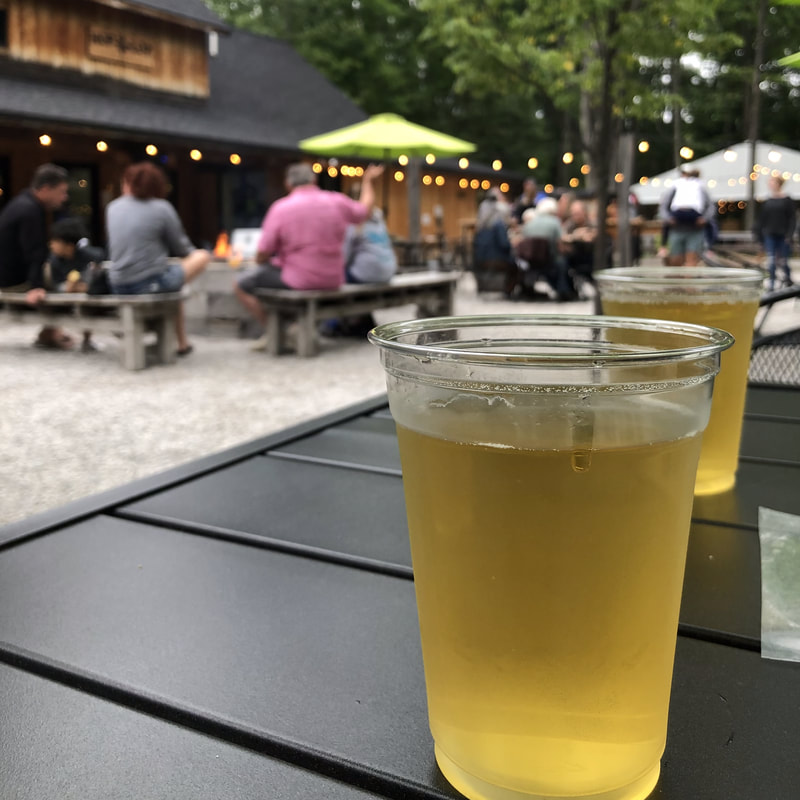
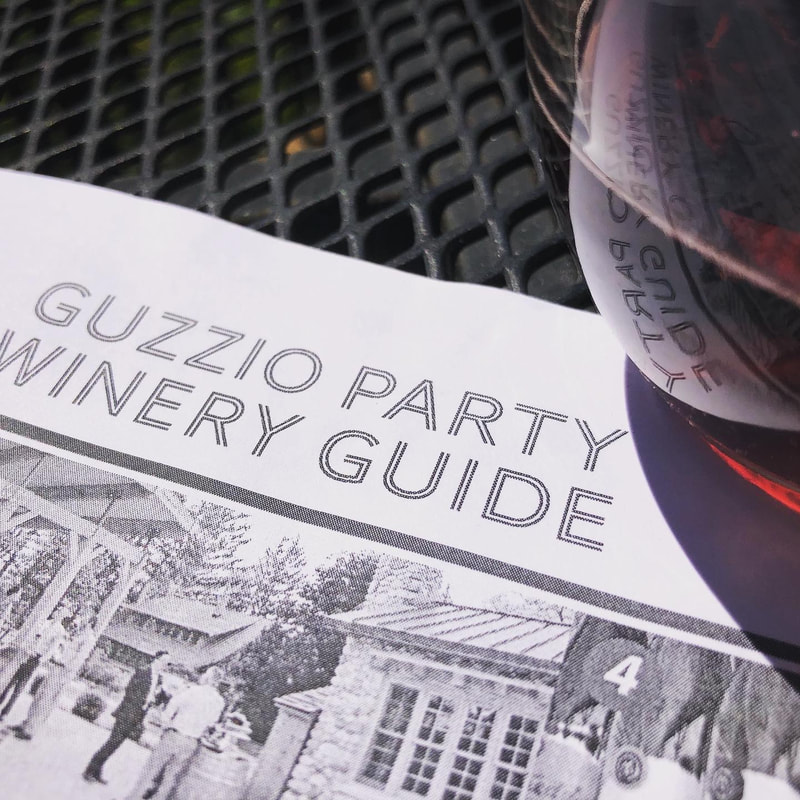
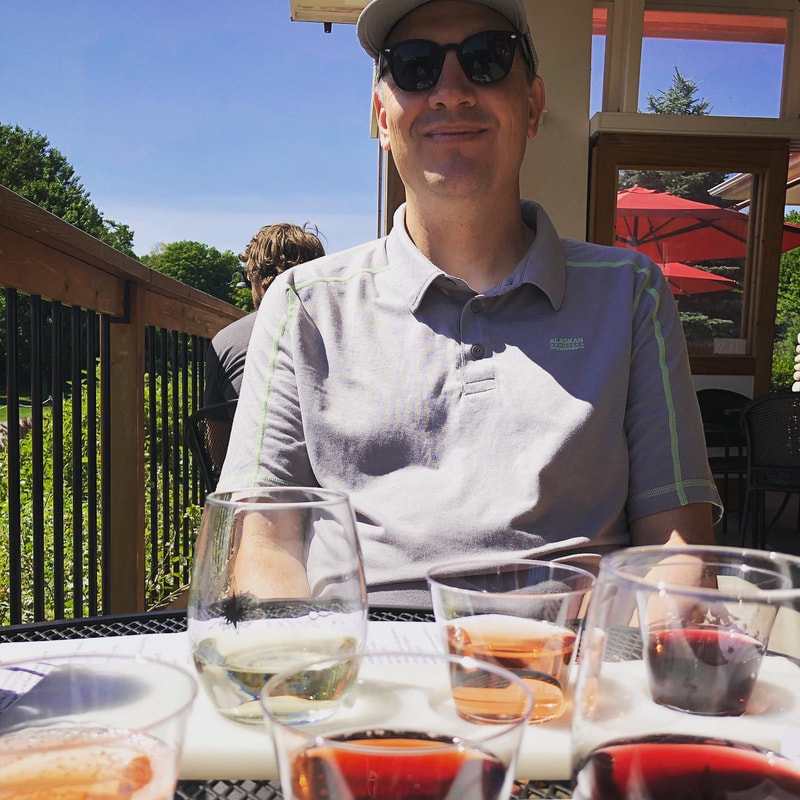
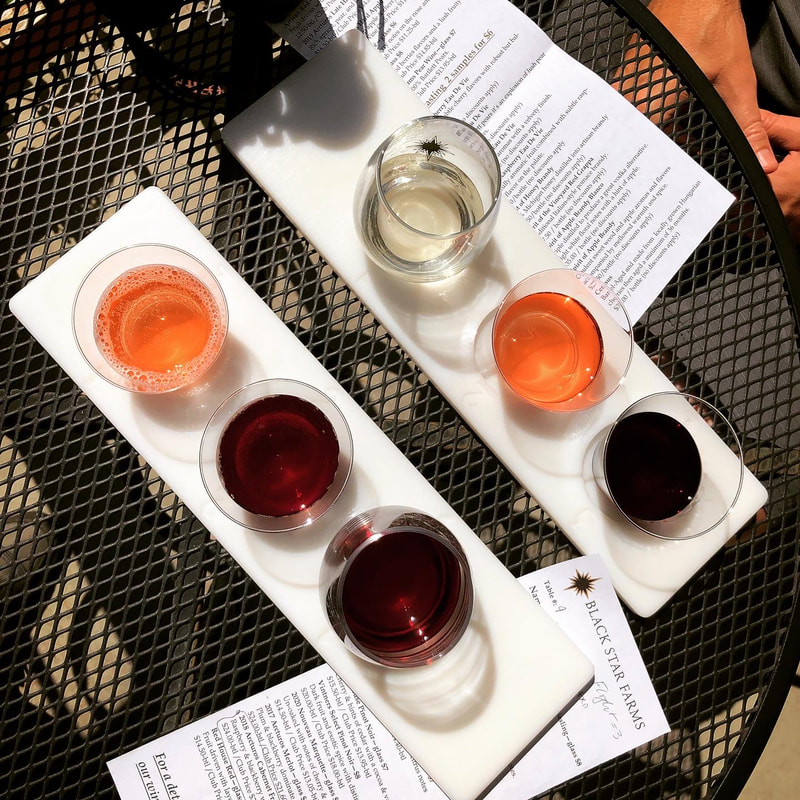
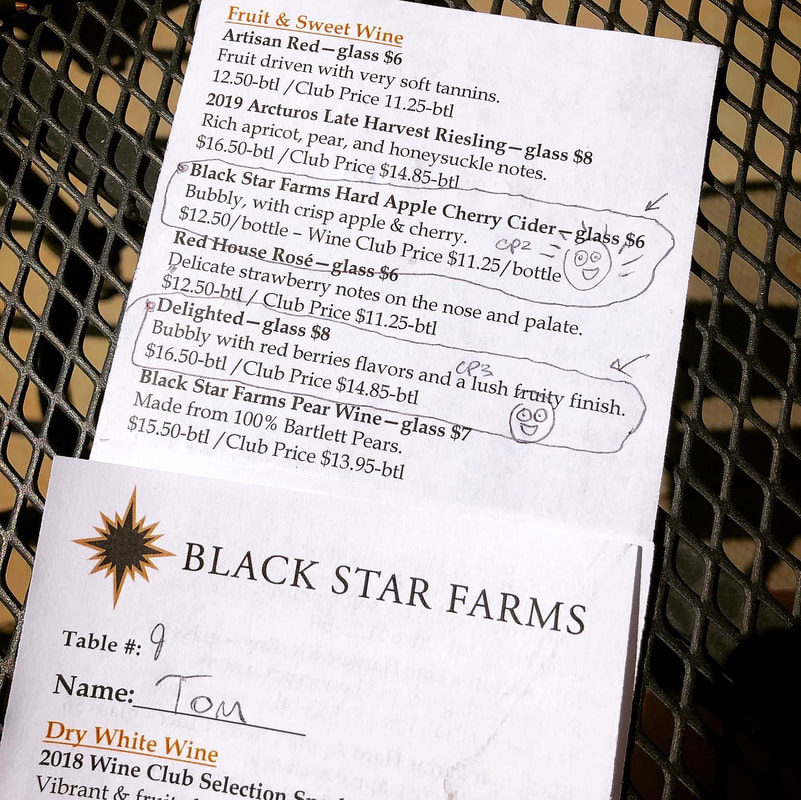
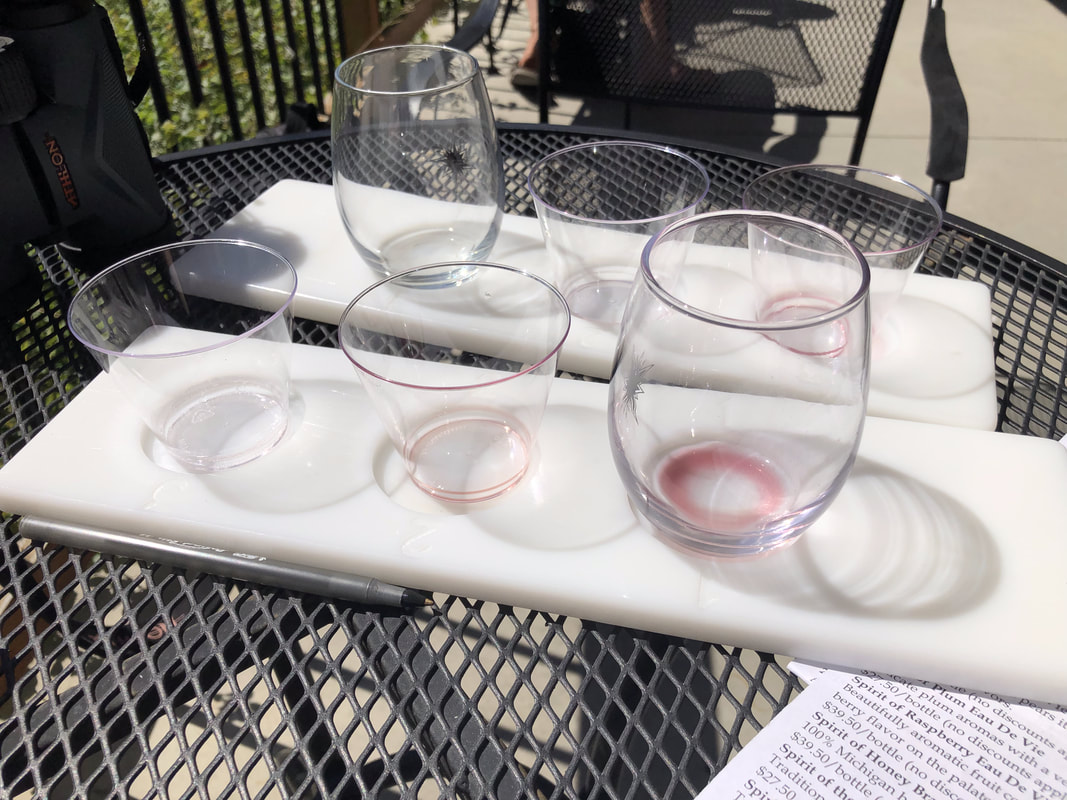
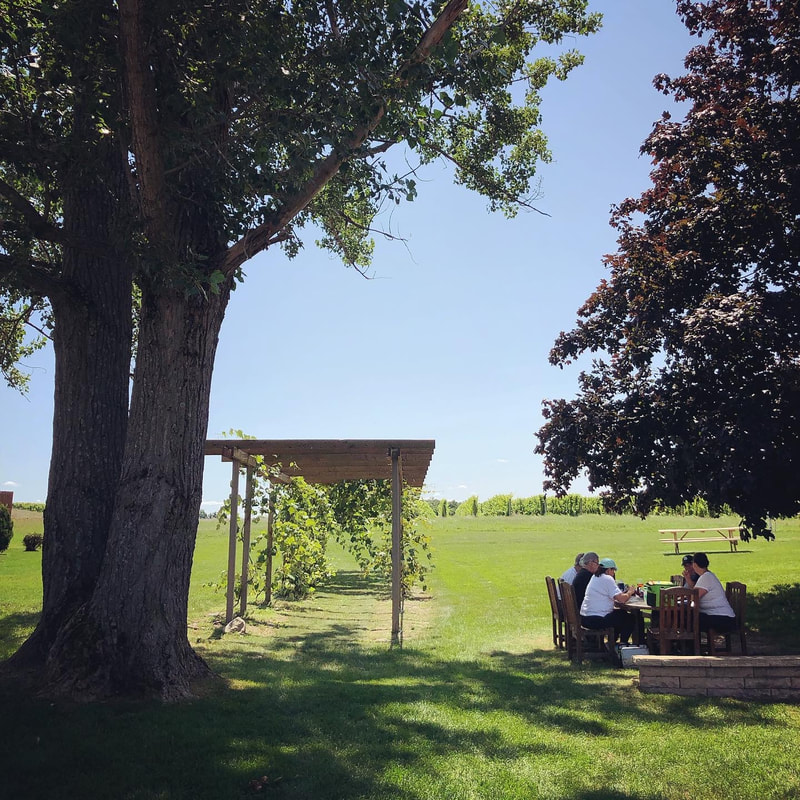
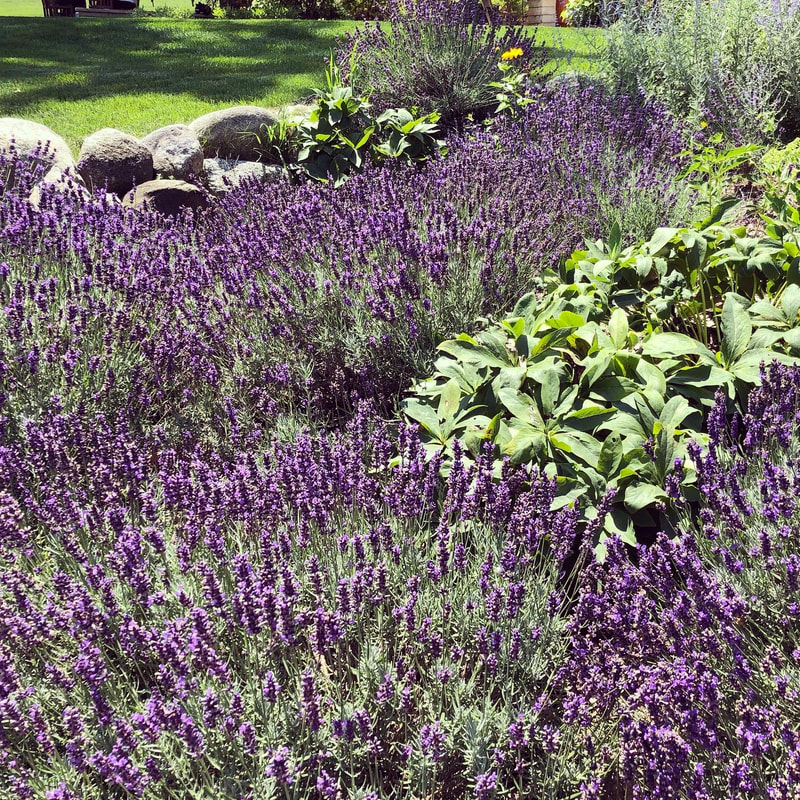
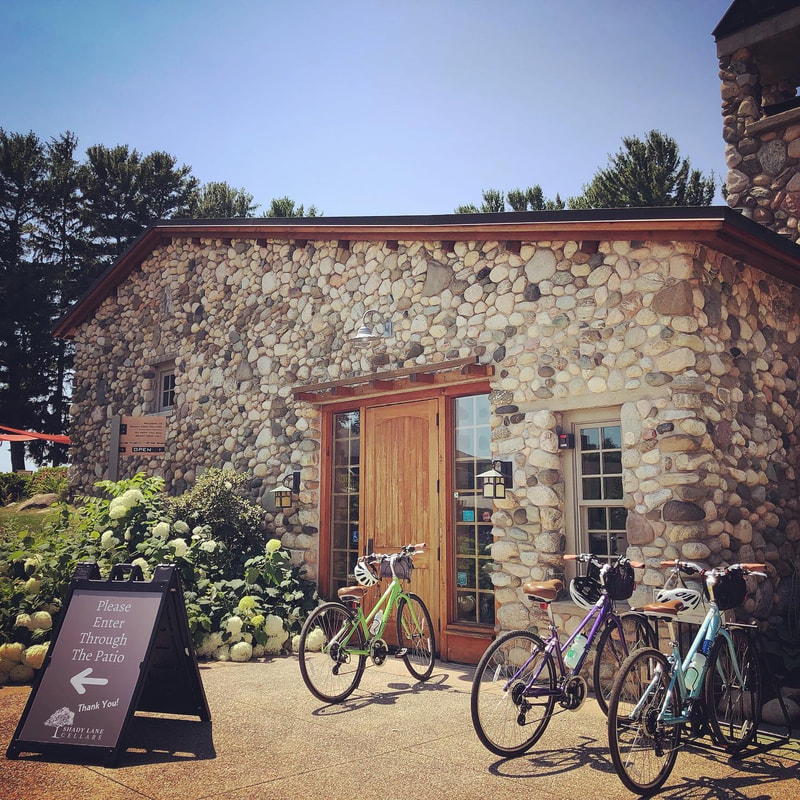
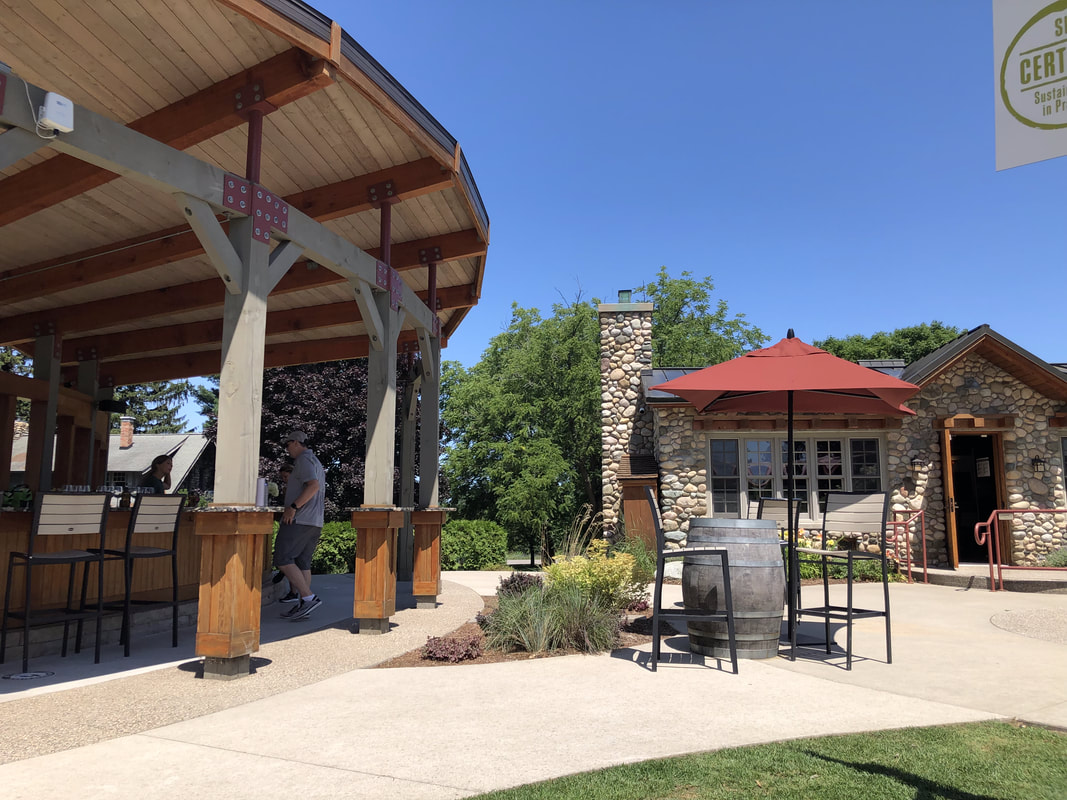
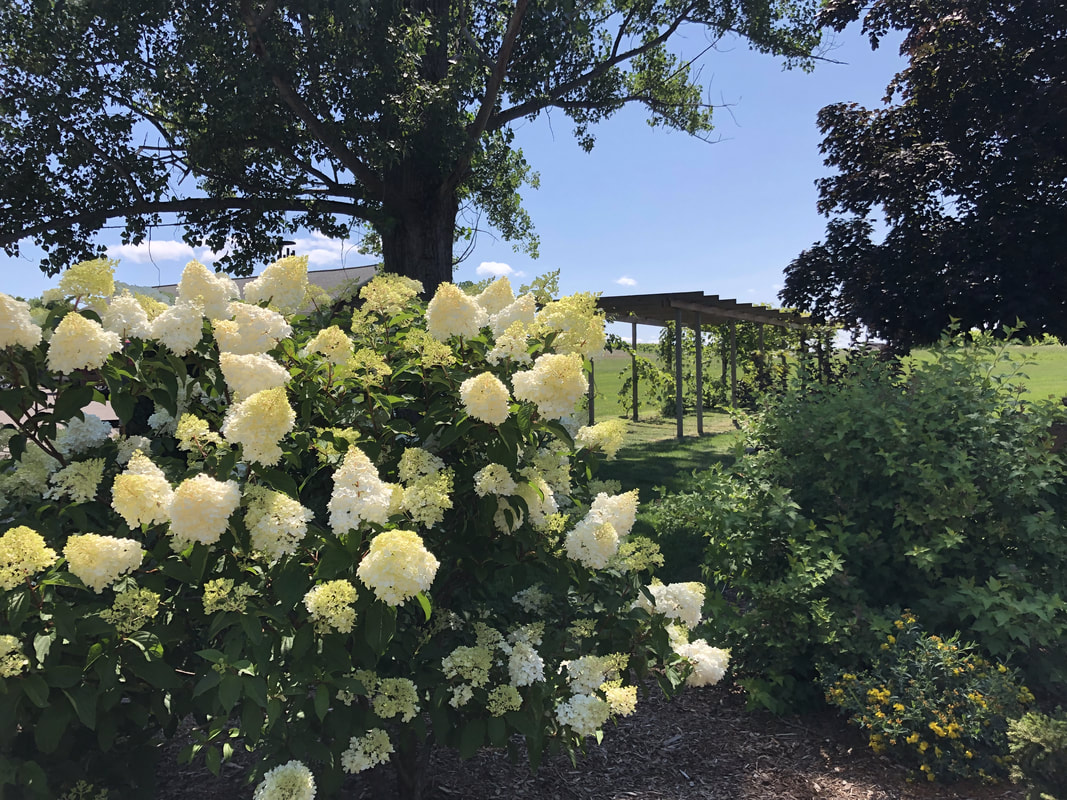
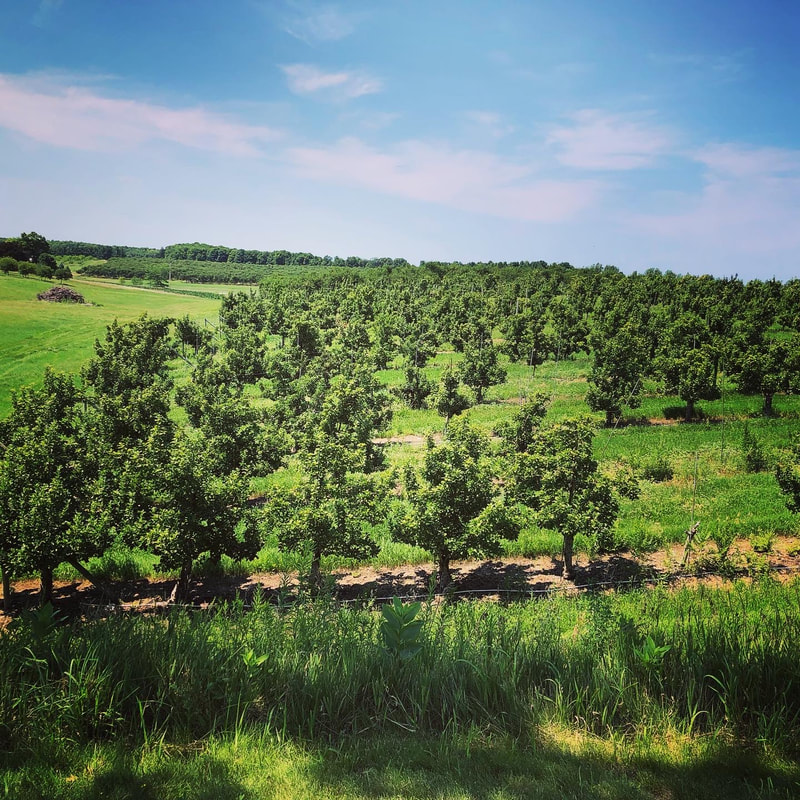
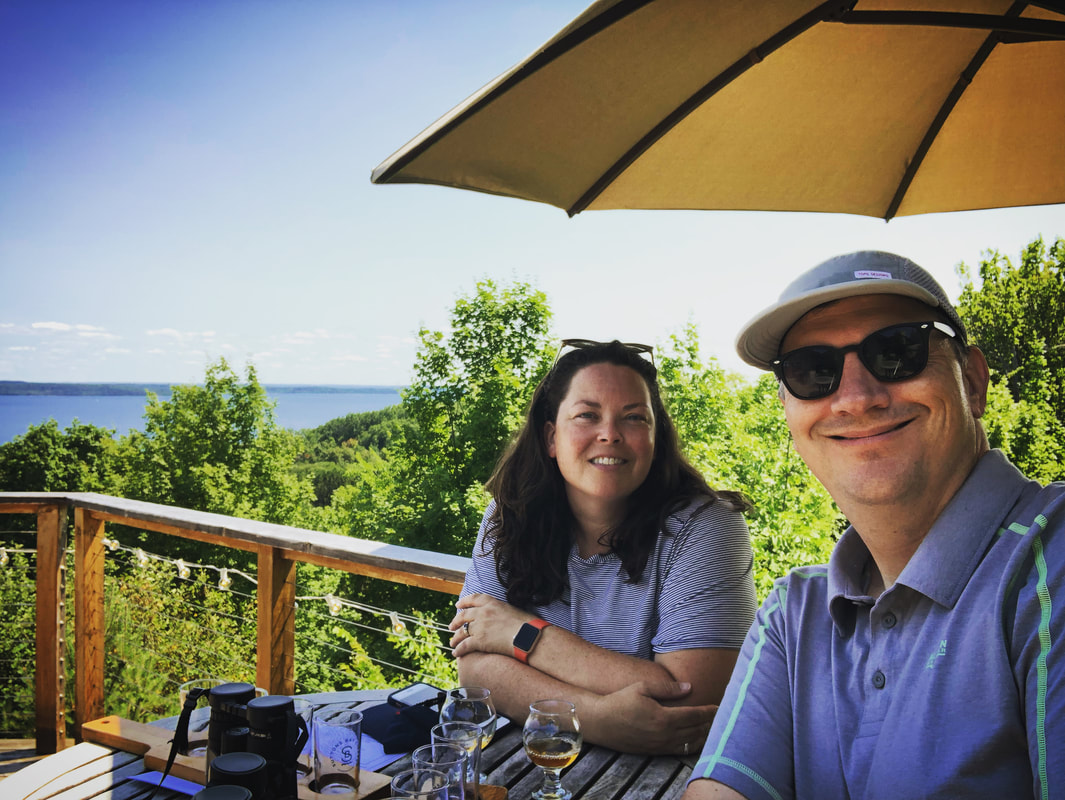
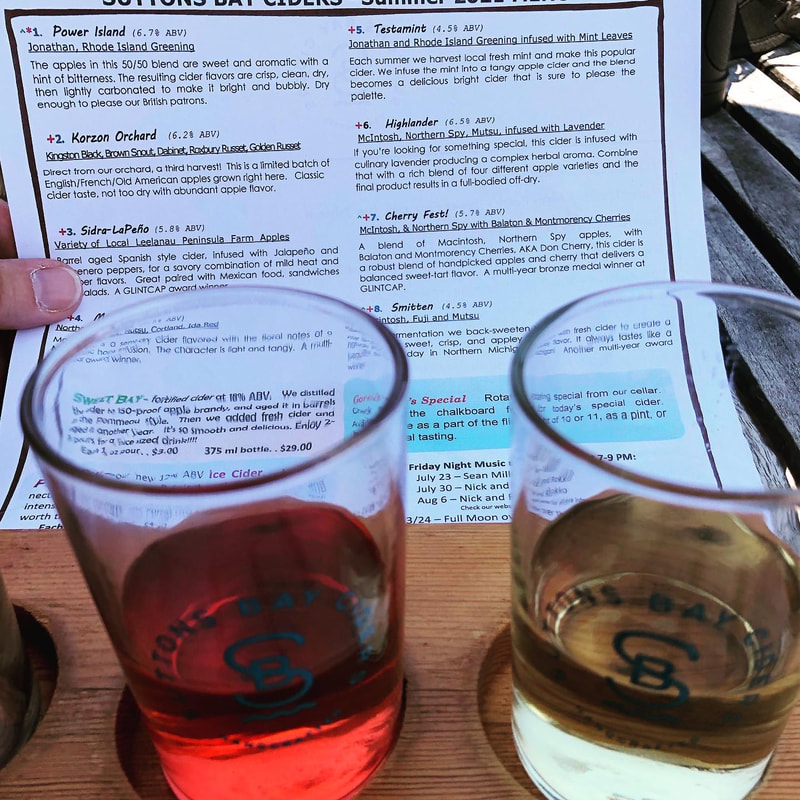
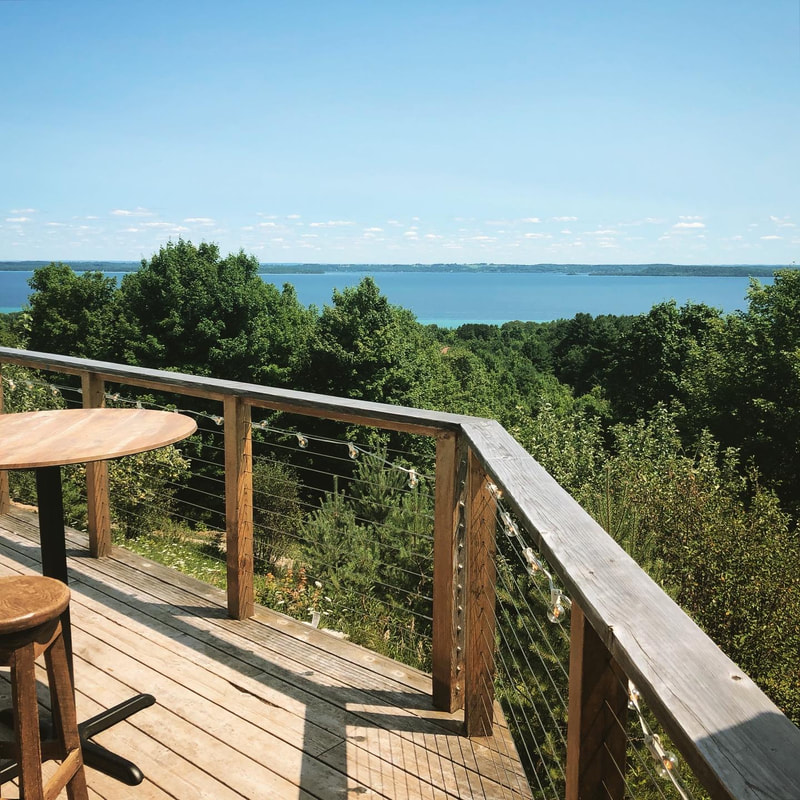
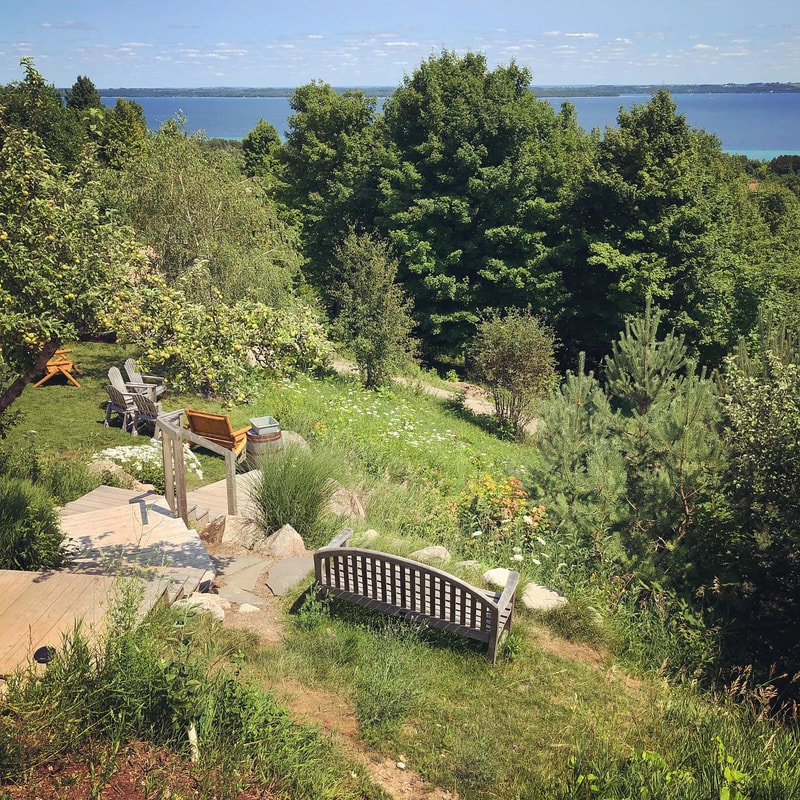
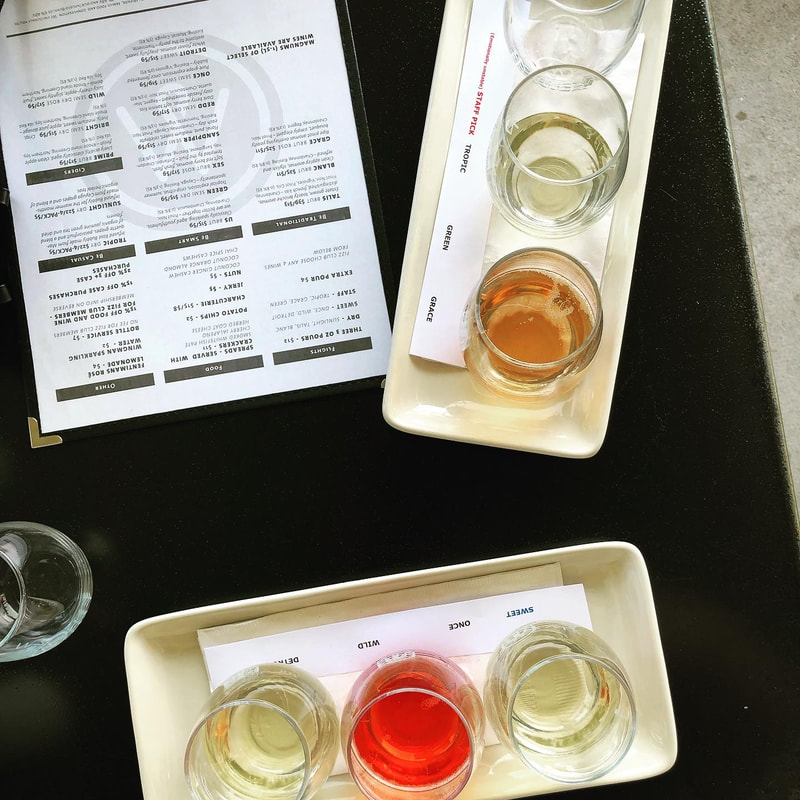
Grand Traverse had us stopping at Black Star Farms, Shady Lane Cellars, Suttons Bay Ciders, and Mawby Wines. We were looking at roughly seven miles out and another seven back, which was a lot for us. Fortunately, the bike trail itself is mostly level and very well maintained, but we had to go on-road and up some hills to get to a few stops. Sometimes we walked if a particular hill was too steep. We did a lot of pedaling, and tasted a lot of fermented fruit juice, but didn’t appreciate all of it. That has more to do with us, as Cecily and I aren’t big wine drinkers, and we like our cider on the sweet side whereas the American cider market leans towards dry. Still, each place was simply beautiful. Black Star Farms is a “160 acre winery estate” with an inn on-site that offers gourmet, farm to table meals complete with wine pairings, and guests can stroll through the vineyards or hike some of the trails running through the property. We settled into a table on a deck overlooking the vineyards and ordered a flight; and while we were tempted by a few wines, their apple-cherry cider was the winner. Having never been to the area before, I’m not sure how crowded it should have been, but it seemed like we had more space than we should. That cuts two ways with COVID. You want enough room to feel safe, but you want a place like Black Star to be crowded enough to thrive. Maybe we were just early -- it was barely after 11:00 -- but wasn’t day-drinking a thing in wine country in the summertime? We had another glass of the apple-cherry cider, bought two bottles, and then wobbled, er -- pedaled -- to Shady Lane, where Grand Traverse had a delicious lunch waiting for us in insulated coolers.
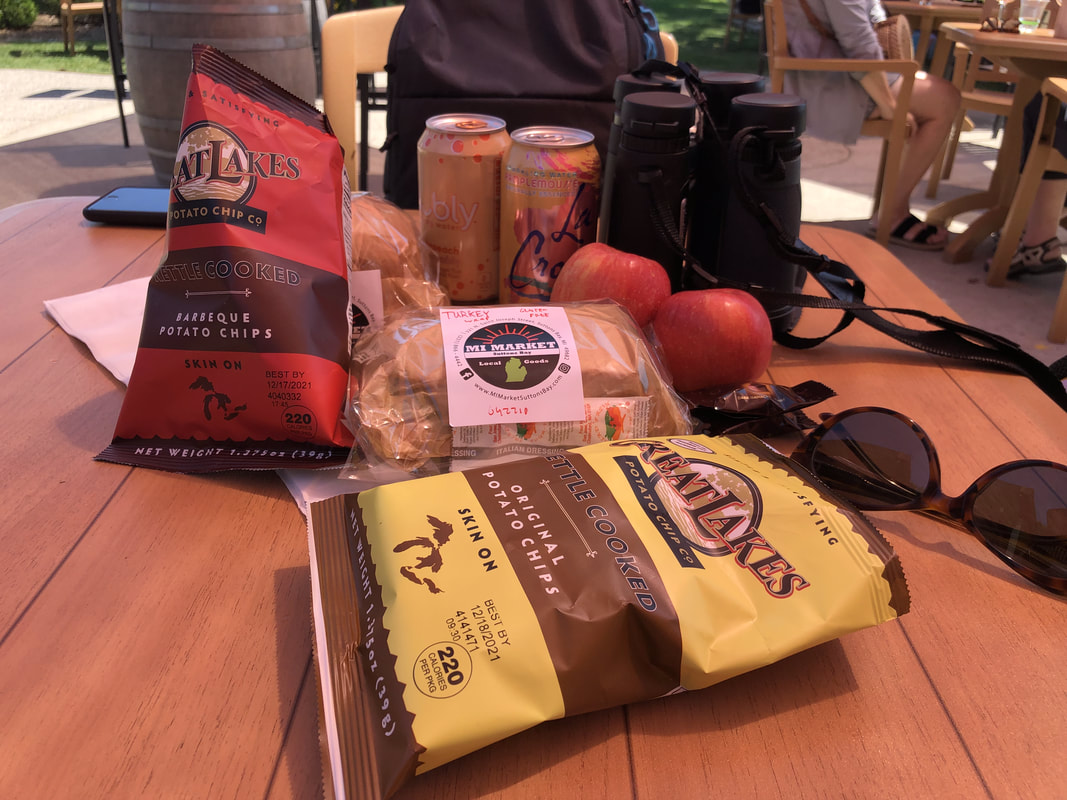
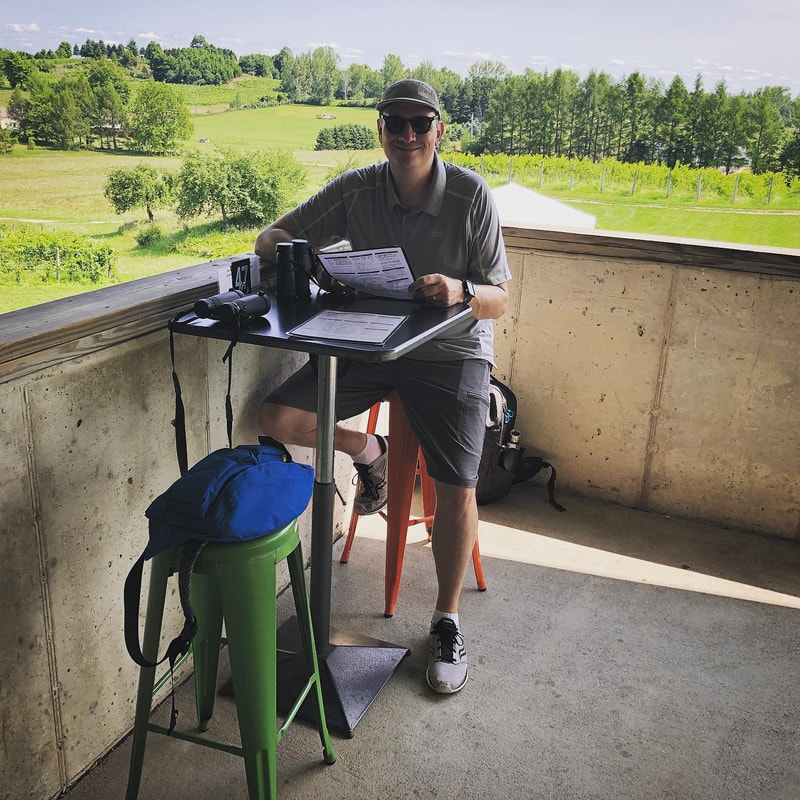
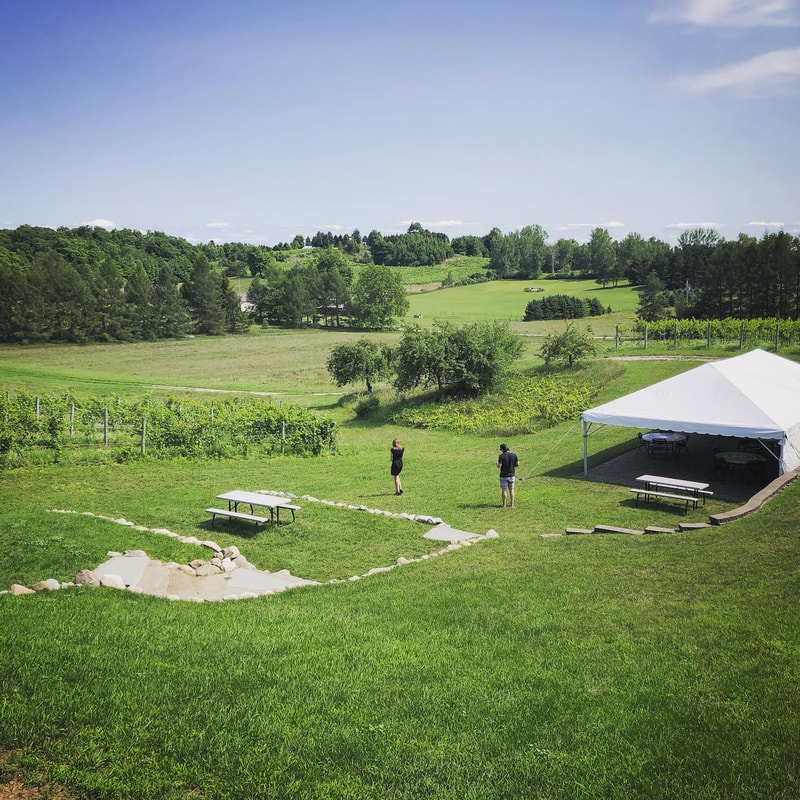
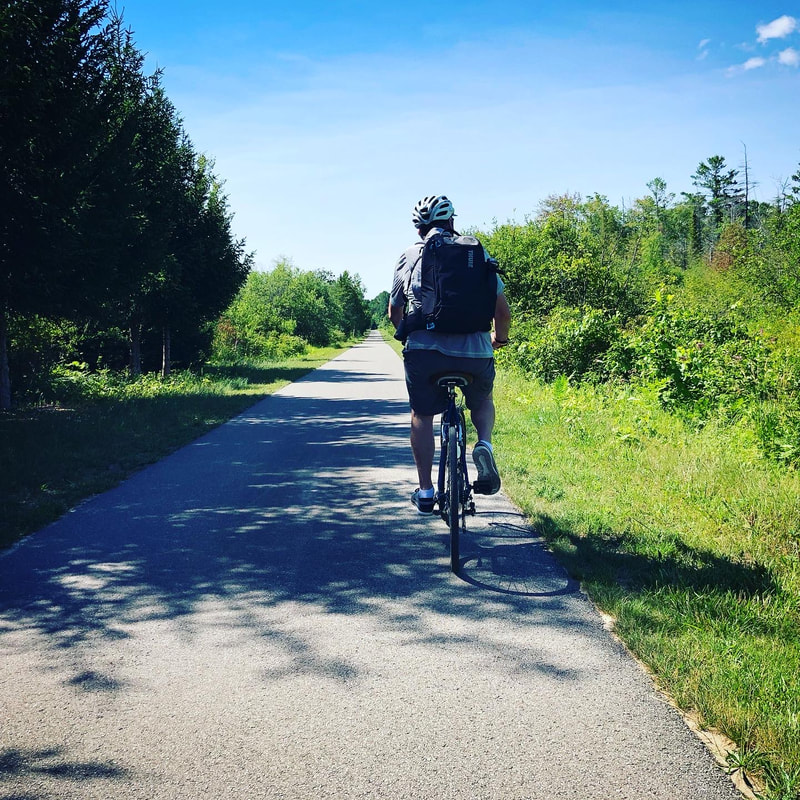
We didn’t do much bird watching that day. Birding is a casual activity that requires time and patience. We were on a schedule, and most of what we saw were fleeting glimpses of familiar birds -- an American Goldfinch, a Robin. A Red-Winged Blackbird, and a Cedar Waxwing. I had never seen a Waxwing before this summer, and now they seemed to be everywhere I looked. Despite being rushed, I did add two birds to my life-list: a Purple Finch, and an Indigo Bunting. The birds, the wine and cider, the scenery, and the company roll together in my memory like a blurred out montage from a video for a happy song by the Cure or some other dreamy shoe-gaze act, all gauzy and bright and warm, which is exactly how I felt at the time. Unsalted. Unhurried. Content.
Even under the pressure of a global pandemic, we cannot live in a bubble; not really. In communities that are physically closed because of COVID digital roads continue to push and pull information to us and our children, no matter how fast we pedal. This year, students in two other communities -- one outside of Fort Worth, Texas and another outside of Portland, Oregon -- conducted their own “slave auctions” on social media. While people and politicians argue whether or not systemic racism exists, America the Beautiful remains ugly and unwelcoming in ways you can’t see from the seat of your bike, though the people you ride by may be on either side of that ugliness. Southern trees once bore strange fruit. Oregon was meant to be a “white utopia.”
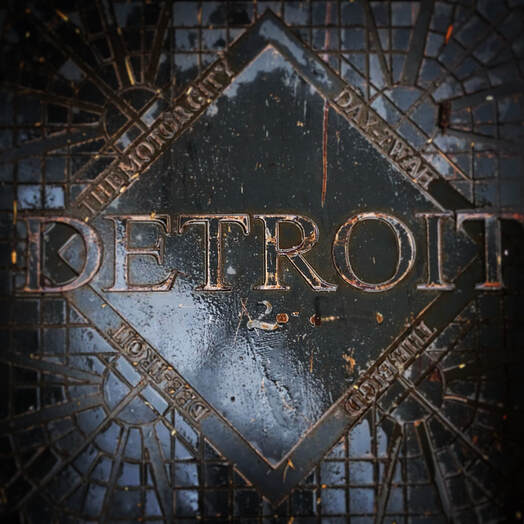
What happened in Traverse City doesn't make my memories of the area any less gauzy and golden. The ugly things that happen in beautiful places challenge us to make sure that all Americans can enjoy that beauty, especially when most of the Americans who live in our community look like us. “America the Beautiful” isn’t just about the physical beauty of the country, even though those are the lines most people seem to remember. Other lines talk of brotherhood, something I don’t think some students in Traverse City remembered or that the ones they bid on felt. It recognizes that our nation has flaws -- an act some people feel is now divisive and unpatriotic -- and asks for God’s help in mending them. It mentions gleaming alabaster cities, which describes Detroit, our next stop, in its prime.
- Published on
I honestly haven't heard a song of Mirren's I didn't like, though. I think there are a few reasons for this. I'm not sure how she hears a finished song, but when Mirren plays me the rough cuts, they're in a style that I'm already partial to: just her and her guitar. I love the "three chords and the truth" vibe that comes through as opposed to this:
Stories have arcs because we are satisfied by the idea of resolution, and stories with unsatisfying endings don't find much of an audience, or leave those they do find scratching their heads, especially if "Don't Stop Believing" is playing in the background. When I started out this series of posts over a year ago, I set out to create a playlist that served as a soundtrack to my COVID story. This is the last post in that series, and while (I think) I have a suitable song to roll over the end credits my story doesn't have a neat ending. Our stories don't stop when the theater lights come up. As my COVID story ripples and vibrates into a future I can't predict or understand, this is the song that plays at the end:
"RESERVATIONS" - WILCO
"I've got reservations about so many things, but not about you."
Many staunch advocates of a full return -- not just to school, but to life as it used to be -- attack measures like social distancing as "security theater" and perhaps they're right. But I’ve seen a lot of data and read too many “studies” drawing different conclusions. The very nature of the conditions in which many of these studies are being conducted is not conducive to the highest level of reliability and validity. We need look no further than the data the CDC used to amend its guidance on distancing in schools from 6 to 3 feet, which was based on a study from Massachusetts that relied on district self-reporting and community contact tracing measures that weren’t standardized, systematic, or reliable. Can we be sure that this study is any more valid and reliable than others that come to different conclusions? Probably not. But we’re living the scientific process in real time, relying on a system that’s stretched to its limits to find answers in an earthquake. It's not clear how new variants might impact school in the fall, but Massachusetts, where I live and teach, is planning for a full return to pre-COVID school, Delta be damned.
Whatever nerves I feel about the fall, my reservations didn't stop me from going out on Derby Day with some friends. The last time my wife and I ate a meal in a restaurant it was with Jenn and Don at the beginning of the pandemic, so it was fitting that our return to live dining almost a year later was with them. Maybe it was the mint juleps, but I got emotional. They're hidden in this picture, but each of us had masks close at hand. That fact, along with the QR codes we scanned to access the menu served as evidence that the reservations I feel aren't unique to me, though it's not clear if what I feel is the result of such measures or if the measures exist because of what I feel. In this particular production of security theater, am I the writer, director, star, or extra? The answer doesn't matter as much as the people I'm sitting with.
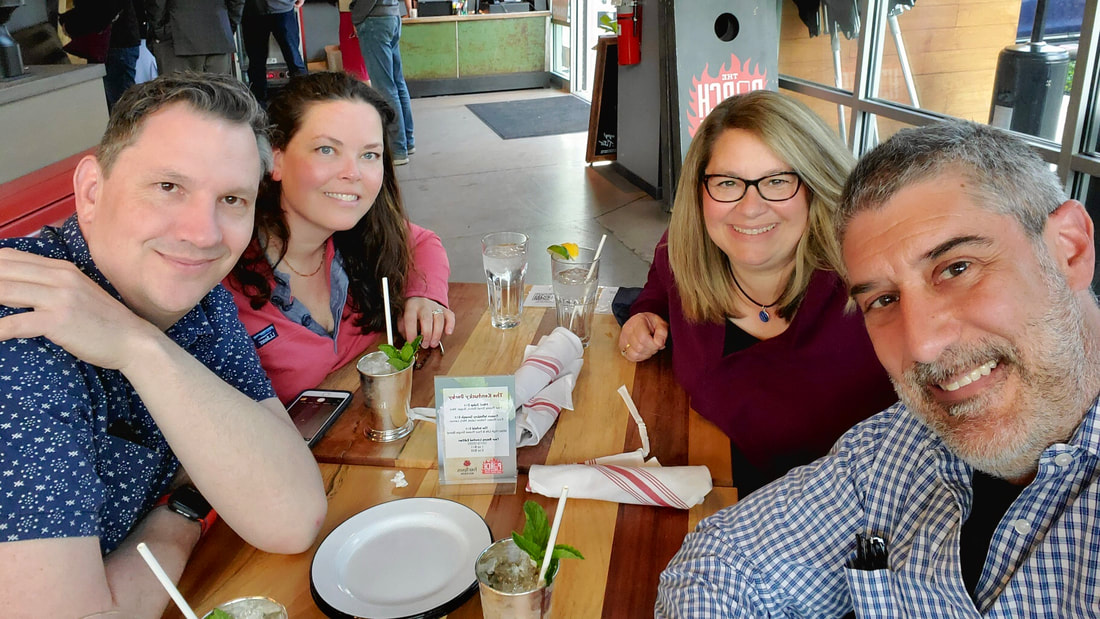
From left to right: not Karen, not Karen, not Karen, and not Karen.
I am sorry. If anything, COVID-19 finds me static, even as emerging variants rise and challenge assumptions about who should mask and where almost as quickly as emerging conspiracy theories "challenge" the science behind masking full stop. The same goes for vaccines. Just as people who should ostensibly know better raise false flags about vaccines, people who do know better punch holes in my security with news that the Pfizer vaccine (the one my wife and I happen to have) is less effective against the mighty Delta variant. COVID has managed to have confusion make sense for everyone.
When my first wife and I divorced, I used that trauma to grow and change. "Reservations" would've been a good song for that story's soundtrack, too ("how can I convince you it's me I don't like?"). But my separation and divorce was a more personal, visceral experience. Maybe COVID would have had a similar impact had it hit closer to me. As it stands, I am gratefully healthy and gainfully employed, as are the people close to me. This pandemic did nothing to change that. In light of this, the "film" I've been writing and scoring is a documentary filled with drama I can observe and have empathy for, but not own.
When I look at my previous entries in this soundtrack series, I know this to be true. I wrote essays about the environment, class, science, loneliness, equality, and belief through COVID's lens. The sides I took on each of these issues were the same ones I stood on pre-pandemic. A certainty that came with our slow return to "normalcy" is that any of these essays -- save maybe the one about the Rolling Stones -- could've been written without COVID happening at all. It's that certainty that gives me pause. But "I'm bound by these choices so hard to make" and while it raises doubts, it also amplifies the constants I crave and make choices for. In the end, "None of this is real enough to take me from you."
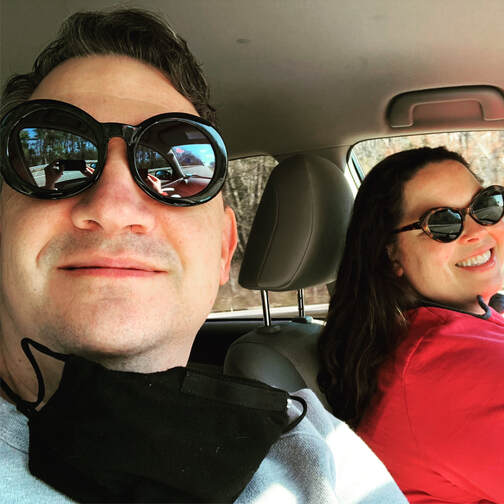
The author -- feeling more certain about those glasses than he should -- and his beautiful wife.
- Published on
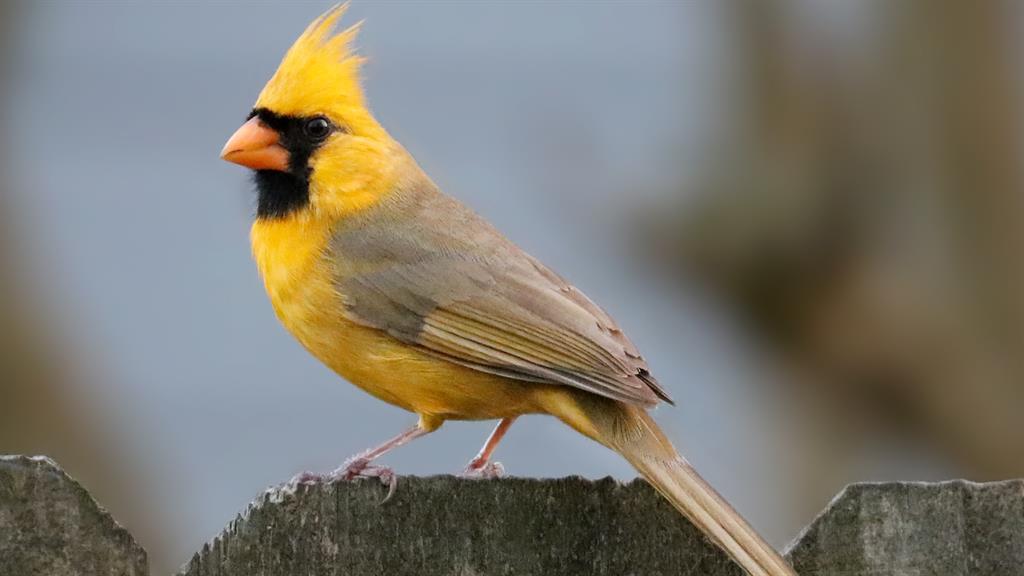
A yellow cardinal spotted in Alabama in 2018. Photo by Jeremy Black.
Until it isn't.
So my red is your red, even if objectively we're actually seeing different colors, out of an expediency born of a time when knowing the colors of certain berries meant knowing which ones were good to eat and which ones were poison. We classified, coded; and, because it could be a matter of life and death, collectively agreed to give what our eyes saw a common name. But every so often colors become contentious, and not because of our eyes, but because of our baggage. Trying to decide what color to paint the living room can lead some relationships to ruin. Red and blue have become shorthand for who believes what in America, and who is more or less American as a result. Black and white are loaded with meaning that has consequences beyond their places on or off the color wheel, as this clip from Spike Lee's Malcolm X illustrates:
"YOU BETTER BELIEVE!!!" - DECLAN MCKENNA
"it's all in your head, it's all in your head, it's all in your..."
Skillfully.
I'm impressed by McKenna's talent, but I marvel at his hubris. His latest album, Zeros, was initially scheduled to drop the same week as the new release from The Killers, prompting McKenna to boast to NME, "I personally think I'm going to whoop The Killers." While Zeros was pushed back because of COVID, The Killers' Imploding the Mirage reached number 1 in the UK, outselling the rest of the top five combined. No matter. When Zeros finally did see its release the same week as The Rolling Stones' much anticipated, remastered and expanded Goats Head Soup, McKenna responded with a bit of cheek:
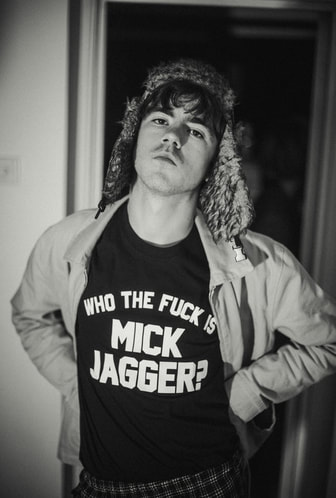
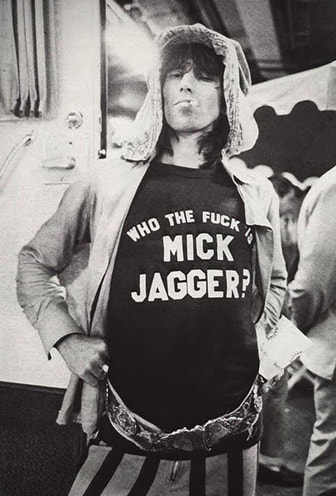
"You Better Believe!!!" is the lead track from Zeros, and it simultaneously affirms and indicts what's possible if... you do what the title suggests. In "You Better Believe!!!" the success McKenna craves, technology and the consumerism that drives it, and religion and religious leaders all "lose their flavors like gum stuck to our heels." Yet McKenna's response to all of these failures is an emphatic, three exclamation point declaration that, still, "You Better Believe!!!" It's an anthem with sentiments the left and right can get behind, even as McKenna hints that they shouldn't. It's this dichotomy that I'm struggling with at the moment. I'm not sure my red is red anymore, though I know the bird itself exists.
I want a climax to this strange story we're staging, but I feel instead that I'm caught in a looping montage of rising and falling action. If 2020 is our collective rock-bottom, then the protests, the election, the vaccine -- all amplified by COVID -- should cause us to engage in the sort of self-reflection that might lead to the cathartic shift I crave. That hasn't happened. Instead the distance between the people who want America to be great again and those who finally want it to be great for all has further eroded and canyoned before my eyes. A disturbingly large number of Americans -- including some at the highest levels of government -- believe that wearing masks to combat COVID's spread should be an individual matter. They're willfully blind to the collective good that comes from the inconvenience of wearing a mask. Yet these same people suddenly have eyes for all lives when it comes to people of color.
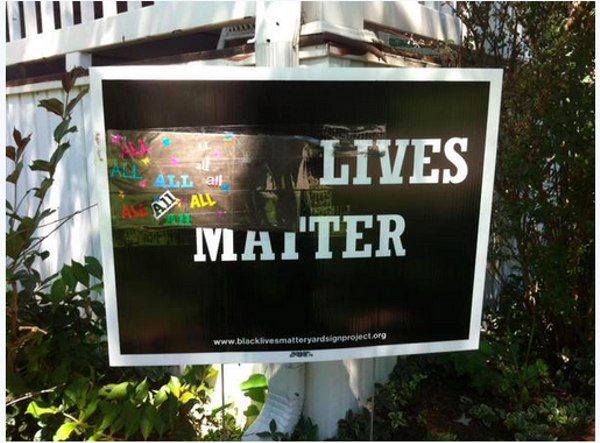
Photo via Riverfront Times
And Nike trainers
Comfort you can feel
And you know that it's real because you saw it at the station
God's creation
With a half off summer deal
- Published on
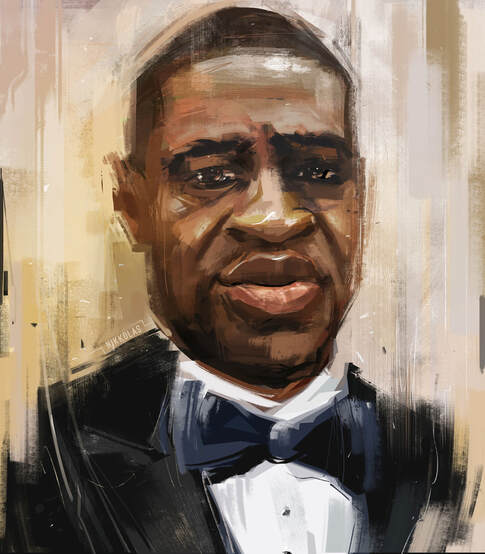
A portrait of George Floyd by Nikkolas Smith. Click the image to learn more about Smith's work.
While we've tried, we've never fully committed to undoing and repairing the damage done to Americans of color, and the steps we have taken have always been met with fierce resistance. It took a civil war and over 600,000 dead to make owning another human being illegal in America, and even then the losers innovated ways to exploit the newly emancipated. We will never fulfill our nation's promise until we accept that believing all are created equal means nothing until all are given an equal footing. Take two identical fish, put one in water and the other on dry land, and tell me which survives.
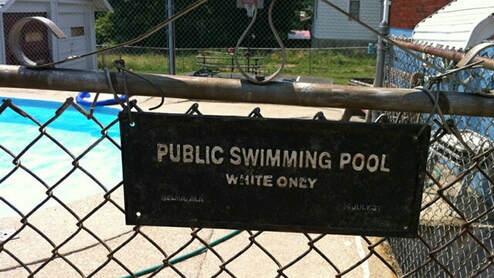
A sign a Cincinnati duplex owner posted at her pool in 2012. Photo: CNN
It's the same trope that Mayella Ewell brought to bear against Tom Robinson in Harper Lee's novel To Kill a Mockingbird. The fictional Robinson is a stand-in for the thousands of real men and women of color who lost their lives to racially motivated terror. The idea that black men in particular are somehow more dangerous than others makes living while black complicated at best and lethal at worst. This notion drove Amy Cooper to tell a black birdwatcher that she was going to call the police "to tell them there's an African American man threatening my life" after he asked her to leash her dog. It is what killed Emmett Till, Amadou Diallo, Trayvon Martin, and now George Floyd.
It's true that these deaths can be traced back to individual actions, but those actions grew from thoughts and perceptions shaped by our nation's cultural conditioning when it comes to black men and black lives. This conditioning didn't start or end with The Birth of a Nation, and it still has lethal consequences. As Dylan Roof shot up a bible study at a historically black church in South Carolina, he told one of his victims "I have to do it. You rape our women and you're taking over our country, and you have to go."
Roof uttered those words in 2015, but you could easily imagine them falling from the lips of a Reconstruction Era Klansman. The same culture that made Roof a killer has, to some degree or another tarnished us all. This has had dire consequences for people of color as a whole. The Sentencing Project's 2018 report to the United Nations on racial disparities in the US criminal justice system found that "African Americans are more likely than white Americans to be arrested; once arrested, they are more likely to be convicted; and once convicted, they are more likely to experience lengthy prison sentences." To draw a sharper contrast, Dylan Roof took nine black lives at that bible study, then got humane treatment and a Whopper from the police. George Floyd got a knee to the neck for 8 minutes and 46 seconds for allegedly passing a fake 20-dollar bill.
"WHAT'S GOING ON" - MARVIN GAYE
What's Going On was part of the soundtrack of that time of my life, along with The Clash on Broadway, Achtung Baby, and Fear of a Black Planet, among many others. Leaving the church cold turkey was not easy. My view of religion was so distorted, I went through physical withdrawals and bouts of intense depression because when I left the church I felt that God had left me. Music and books like The Catcher in the Rye, Their Eyes Were Watching God, and The Autobiography of Malcolm X (which I've written about in detail) helped me figure out the kind of person I wanted to be post-church, and new people came into my life to help me heal. Then the Rodney King verdict was announced and Las Vegas, like many of the nation's cities, caught fire.
The collective disbelief people felt when the not guilty verdict was announced was profound. Officers claimed King resisted, though witnesses contradicted those claims. Then the police said King was on PCP, which gave him a sense of invulnerability and made extreme force necessary, but there was only evidence of alcohol in King's system. There was something else that kept the police's account from being accepted as gospel. The more than 50 baton blows officers rained down on King, resulting in multiple injuries including a broken leg, had all been captured on video. If ever there was a moment where bad cops would see justice for an injustice they perpetrated on a black man, it had arrived. And yet it didn't.
When the cops who beat Rodney King were acquitted, "What's going on?" seemed like a reasonable question to ask.
I remember attending a rally held by UNLV's Black Students Association. I walked up to one of the speakers, who had just given a fiery speech about "mighty-whitey university" and complimented him on his words. After his initial shock, David Smith became one of my best friends. We tried to integrate the student union. We challenged and changed one another only for the better. Since then, we seemed to have grown on somewhat parallel paths, at least socially and spiritually. But we are those two fish I mentioned earlier. While I see David as my equal in every way, I know that society as a whole, subconsciously at the very least, does not.
So "what's going on?"
Accepting my privilege as real doesn't mean life can't be or hasn't been hard for me and other white people. White dividend payments are not directly deposited into my checking account (though I probably make more money than a black man doing the same job). Other white folks don't give me things for free when we are alone (at least not as often as I'd like), despite what Eddie Murphy learned in the 80s.
"What's going on?"
This was the result of the CCSD's "Sixth Grade Center Plan of Integration." In 1968, despite the Supreme Court ruling almost 15 years earlier requiring schools to integrate "with all deliberate speed," 97 percent of the students enrolled in schools in Las Vegas's historically black West Side were black. The unfair and inequitable plan the district came up with was to convert schools in black neighborhoods to Sixth Grade Centers. Black children would attend neighborhood schools for kindergarten, and then be bused to schools in white neighborhoods for grades 1-5, stay in their neighborhood for sixth grade, then hit the buses again for grades 7-12 (which was always the case, as there were no secondary schools on the West Side). White students would face this inconvenience just once, being bused to schools in the West Side for sixth grade only. Even though it was clear that much of the burden to reform a broken system was being placed on the students who suffered from it the most, white families still resisted. Opposition groups staged a one-day "Bus-Out" that kept 15,517 white students home. I can't imagine the impact this must have had on black children, and their perceptions of themselves and the neighborhood they lived in. What were white parents telling their children about black people and how they lived?
When I rode the bus to the Kermit R. Booker, Jr. Sixth Grade center for the first time in 1982, I was scared. I had been led to believe that the West Side was a war zone filled with gang members who shot up buses filled with white children. By the time I moved again, and started taking a different bus to a different West Side sixth grade center, the only thing I was worried about was having to make new friends. My experiences at Booker, including getting there and back, dispelled the myth of the dangerousness of the black community, so much so that I even attended black churches in the West Side on occasion in high school.
I'm thankful for friends like David who helped me change and grow. Yet I still carry racism with me. I think everyone is guilty of leaning on a stereotype now and again, because it's easier than challenging our own biases. Those prejudices have had dire consequences for African Americans. A black man jogging through his own neighborhood can arouse the fatal suspicions of his neighbors. What happened to Ahmaud Arbery, with three white men "saddling up" to protect their property from a threat that existed only in their twisted minds, is a natural consequence of the hate Griffith propagated all those years ago. The fact that one of those men was a former police officer says something about how deeply racism continues to infect our society and its institutions.
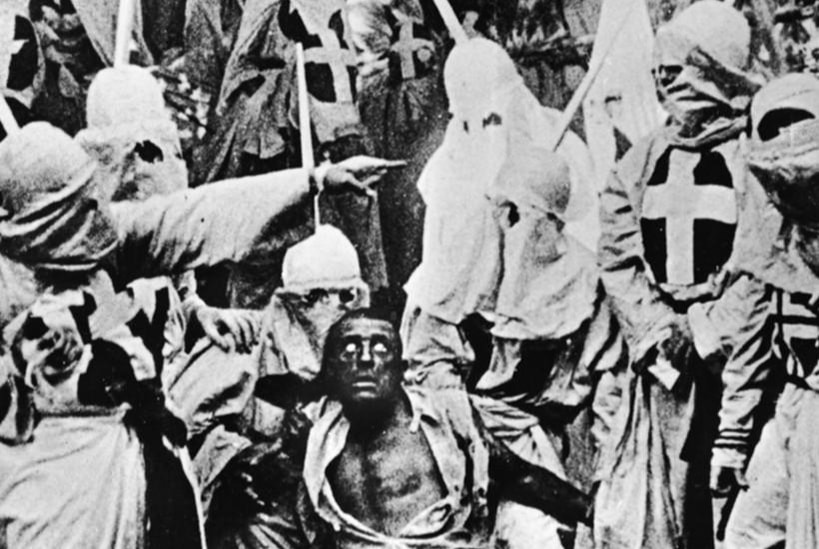
A still of Klansmen bringing "justice" to a freedman who proposed to a white woman. From The Birth of a Nation. Photo: NYPL/Smith Collection/Getty Images, 1915.
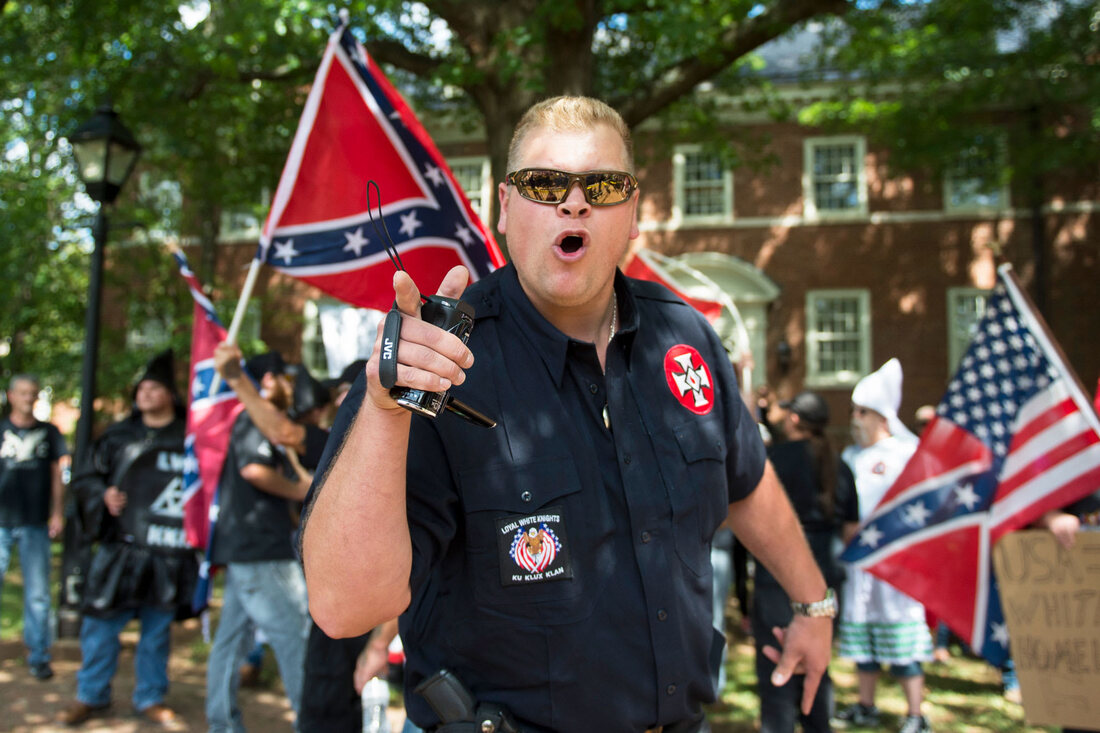
A Klan member confronts counter protesters at the Unite the Right Rally. Photo: Andrew Caballero-Reynolds/AFP/Getty Images, 2017.
But this isn't about Trump, just as the racism in Griffith's film wasn't really about him (though he was undoubtedly racist). This is about us. When"What's Going On?"was released in 1971, Gaye suggested it was a question we should be asking one another in order to break down walls and build understanding. "Talk to me," he said, "so you can see what's going on." Today, "What's going on?" is a question we should be asking ourselves. For white people as a whole, that means accepting that racism is our problem, even if we truly believe that we aren't racist, or feel that we haven't benefited from racism in any way. We must no longer give the oppressed the added burden of ending their own oppression the way the Clark County School District did.
If I could, I would kneel on the neck of my privilege, but privilege is not something I have, it's something that's given to me. Ahmaud Arbery's white neighbors probably ignored a few white joggers the day they murdered him. They probably didn't even notice them. In this, we see how privilege is transactional. We must ensure that our African American brethren are included in the exchange -- not because we are racist, but because they are suffering, and for no reason. It's not good enough to not be racist. We must be antiracist. In that sense, "What's going on?" is still a question we must put to others, just not to black people. We know what's going on with them. They are suffering. They are dying. They are tired. "What's going on?" must be a challenge we make to power whenever a person of color is denied the level of dignity and respect we demand for ourselves. Racism did not start with us, bit if we question more than we accept, we can conquer the hate it causes.
TAKE ACTION:
GET EDUCATED:
- The Autobiography of Malcolm X, by Malcolm X
- Between the World and Me, by Ta-Nehisi Coates
- Beloved, byToni Morrison
- How to Be an Antiracist, by Ibram X. Kendi
- The Color of Law: A Forgotten History of How Our Government Segregated America, by Richard Rothstein
- So You Want to Talk About Race, by Ijeoma Oluo
- Published on
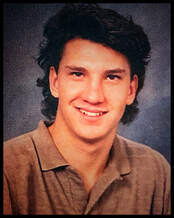
That's my first impression when I look at my senior picture. I mean, damn! Those waves! They looked like they popped right off of John Taylor's head and on to my scalp. It would be interesting to hear today what my classmates thought of me then, if they can recall any impression of me at all. I really didn't embrace everything high school had to offer. I mean, I dabbled. I wrestled (poorly) for two and a half seasons, went to a few parties. I devoured every art class I could take. But I wasn't in any clubs. I rarely went to any dances -- not even prom -- and I didn't date a girl who went to my school, not seriously at least, until after I graduated.
So when people posted their senior pictures on social media in support of this year's seniors, I only kinda got it. I think those people looked back at their time in high school, saw the things they did and the stages they crossed, and they got sad because today's seniors have had their last year mutated by the coronavirus. But not every kid consumes school the same way. This was true for these guys, it was true for me, and I'm sure it's true for today's students, too.
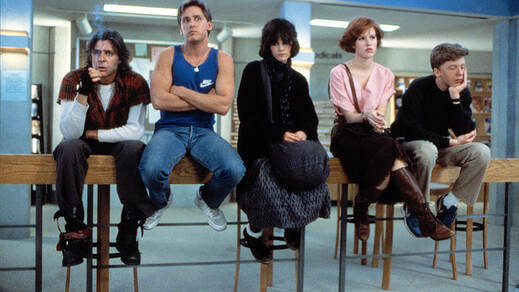
Somewhere in the bible it says that each person has to work out their salvation with fear and trembling. I don't know about salvation any more, but I think that fear and trembling does apply to our attempts at making sense of quarantine. As I try to come to grips with how this situation is going to impact the teens in my life, I'll share this song along with my senior picture, knowing full well that it can't change what they're going through, or how what staying at home looks like for them:
"I WANNA DANCE WITH SOMEBODY (WHO LOVES ME)" - ILLUMINATI HOTTIES
I think her time in quarantine is lonely, but not in the way it would have been for the teenaged me. Teenaged Tom definitely wanted someone to dance with. My daughter has that someone, only she can't see, let alone dance with him. When we talk about it, it's the indeterminate nature of the situation that frustrates her the most. Where she lives in the northern reaches of New York state, restrictions are being eased, but uncertainty remains, and it continues to shift timelines and alter plans. I know my kid won't be marching on downtown Plattsburgh, carrying a sign demanding that her boyfriend be liberated, but practicality can't cancel the ache that comes with someone's absence.
It's easy for people to try dismiss such feelings from a teenager, but I think that's hypocritical. Even Teenaged Tom felt the searing power of young love; and, more often knew the sadness of its absence. Those memories make this version of "I Wanna Dance with Somebody" mine, in the same way "We Could Send Letters" by Aztec Camera -- which came out 20 years before she was born -- is my daughter's today. Loneliness is not linear. It's a raw, violent thing; a virus of a different sort that -- like love -- has been infecting the star-crossed for all time.
- Published on
When the Beatles split to find themselves as individuals, the Rolling Stones finally found their identity as a band. They didn't fill a void so much as they created, defined, and occupied a completely new space. The era that birthed the Beatles' decline saw the seed of what Rich Cohen calls "the four greatest records in history" -- the Stones' "golden run" of Beggars Banquet, Let it Bleed, Sticky Fingers, and Exile on Main Street. These albums gave us songs like "Street Fighting Man," "You Can't Always Get What You Want," "Brown Sugar," and "Wild Horses" among many others. The fact that these songs were written and recorded during times just as turbulent for the band as anything the Beatles faced says something about how great an accomplishment they actually are.
What was golden for the Rolling Stones in the studio was rusty and jagged outside of it. There were arrests and infighting. There was the decline, departure, and death of founding member Brian Jones. Keith Richards began his own spectacular struggle with heroin addiction. There was Allen Klein, the "manager" who helped speed the dissolution of the Beatles and who left the Rolling Stones nearly broke. They headlined what they hoped would be the "West Coast Woodstock," only to see the Altamont Speedway Free Festival descend into violence and murder; the Sixties ethos of peace and love beaten with pool cues by the Hells Angels as "Sympathy for the Devil" blasted from the stage. Through all of this, the band did what their name implies: they rolled with and through it, which is why a track from Exile on Main Street is up next on my soundtrack.
"TUMBLING DICE" - THE ROLLING STONES
It may have found one nearly 50 years after its release.
Lines like "the sunshine bores the daylights out of me" from "Rocks Off" describe the growing ennui I'm feeling after forty-some-odd days of staying at home, while "Rip This Joint" could easily be co-opted by the covidiots protesting their stay at home orders. The lyrics to "Casino Boogie" were put together like a puzzle (a favorite quarantine pastime), with Richards and Jagger tearing up newspapers and magazines and then fitting phrases together to make the song. "Ventilator Blues" was inspired by the stifling Nellcôte basement where much of the recording took place, but the song's literal and figural relevance to today is evident in "everybody's gonna need some kind of ventilator." Who isn't feeling a bit "Torn and Frayed" right now? Still, it's "Tumbling Dice" that does it for me, and it's not just because "women think I'm tasty."
I can't make a case for the song being wholly appropriate for this situation, or for me at all, even in the best of times, and I think that's why it appeals to me right now. I'm a pretty level-headed person settled comfortably in a loving and monogamous relationship. I (still) have a job and the people I love are healthy. I'm not one who is ever looking to gamble with that sort of security, but I can understand why leaving things to chance might be appealing, especially since the certainty and control we are never really guaranteed has been challenged even further by the coronavirus.
We've had to give up a lot of certainty in the face of a virus that may or may not effect us. It is a threat that has reshaped everything we do. Taking my sick pup to the vet gave new meaning to being a "rank outsider." It meant staying in the car while a tech took her inside, then waiting for the vet to call so we could discuss her symptoms, and then waiting again for the vet to call back with a diagnosis and plan for treatment. I can't imagine having to do something similar with my wife should she fall ill, yet that sort of distance worrying is real for far too many right now. Too much waiting and empty waiting rooms, so we send our goodbyes through the air and hope they travel farther and faster than the virus.
COVID-19 has us all at "sixes, sevens, and nines." Like it or not, what used to be normal is not a safe bet, and there is no new normal for us to lay odds on just yet. Still, through all of this, the Stones seem to be having yet another revival. Their performance of "You Can't Always Get What You Want" for Global Citizen's One World: Together at Home "concert" stood out. A year ago, they just happened to record an eerily prescient single, "Living in a Ghost Town" -- their first new original music in eight years -- which they rolled out a few weeks ago.
The Beatles will always be shiny and new. They are forever standing around a psychedelic drumhead wearing day-glo band uniforms. One of their many gifts is to be discovered again and again by generation after generation, their story a perfect pyramid of exposition, then climax, then denouement we listen to on repeat. The Rolling Stones have always moved too quickly for such consumption, and yet for many they are just as eternal.
People joke that if the coronavirus ever came in contact with Keith, it would have to go into isolation. They wonder why scientists aren't trying to derive a vaccine from his blood. What they don't understand is that it wouldn't work without Mick. It never has. Andrew Loog Oldham knew this when he locked them in the kitchen of their dingy London flat and told them not to come out until they wrote a song (they did -- "As Tears Go By" -- which became a hit for Marianne Faithfull). They've had trouble staying in the same room together without fighting ever since. Even now, they have to be kept far apart backstage, as Keith can't stand to hear Mick go through his vocal exercises before a show. And yet, when they take the stage, it all works. Keef brings the riffs, Mick brings the words, and we all keep tumbling.
- Published on
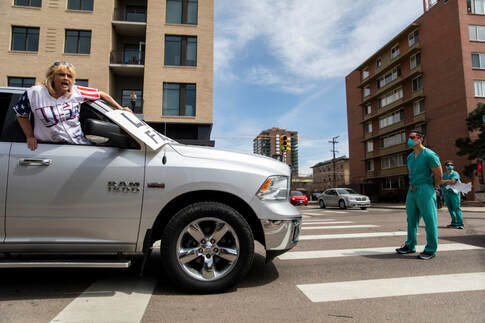
Next, he said that governors will make decisions about when it's safe for their states to reopen (despite falsely asserting that he had "total authority" on the matter), only to undercut state-level decisions with reckless tweets that produced scenes like this, captured by Alyson McLaran:
"BALL OF CONFUSION" - LOVE & ROCKETS
Alexander: What do you say to Americans, who are watching you right now, who are scared?
President Trump: Peter, I say (looks directly into the camera), my fellow Americans, it's okay to be scared. These are scary times, and we're facing a tremendous threat, a tremendous threat unlike we've ever seen (pauses to look at notes). The coronavirus doesn't hide behind a flag. It doesn't attack using weapons. Guns. It doesn't use planes. Instead, it takes the hands we use to hold our loved ones, and the mouths we use to say "I love you" and it makes them dangerous. Deadly. So you can be afraid, but you need to be strong, too. America has the best people. The best people. People who know how to stand up to fear. We did it in World War II. We did it on 9/11. I was there at Ground Zero, as you know, and I saw it. And we're going to do it in the days, weeks, and months, I can tell you. I can promise you, my fellow Americans, that my administration is going to throw everything we have at the coronavirus, and with your help, we're going to win. So stay home, stay safe, and stay strong.
Alexander: What do you say to Americans, who are watching you right now, who are scared?
President Trump: I say you're a terrible reporter. That's what I say.
It says a lot about Trump's leadership that a high school special education teacher could come up with a better answer to Alexander's question, especially since it was tailor-made for making one seem presidential. The man who once claimed to have the best words couldn't muster anything worth saying to the country. Instead he attacked a reporter for asking a perfectly valid and appropriate question.
In fairness, President Trump then added that the American people needed answers and they needed hope, but these are two things he has been unable to adequately supply despite his daily attempts to do so. The president's answers are usually lies ("Anybody that wants a test can get a test"), and his idea of hope is pushing an unproven drug he has a small financial stake in. His briefings often raise more fear than hope, particularly when the Drs. Fauci or Birx aren't present. In fact, a recent NBC News/Wall Street Journal poll showed that only 35% of Americans surveyed trust the president on the coronavirus. Conversely, the same poll found that 66% of the respondents trusted their own governor, despite decisions like this coming out of Florida.

I get that people are scared, even those (maybe especially those) who are protesting stay at home orders. I'm scared, too. But we can't be willing to put lives at risk today simply because death is inevitable some time in the future. Whitfield and Strong acknowledged in their "Ball of Confusion" that there were people interested in learning and "talkin' 'bout love thy brother" and we have people like that in our confusing world, too. Instead of demanding the right to play golf and get haircuts, the people protesting stay at home orders should unfollow Trump and start listening to those Colorado healthcare workers, and the thousands of others like them, who have asked us to stay home so that some people infected with the virus don't have to die today. There is nothing confusing about their daily heroism, and the quiet leadership that drives it.
- Published on
Even though we've been forced to retreat behind closed doors and makeshift masks we are, in some ways, more connected in the face of COVID-19 than we've ever been. Because of Zoom, my wife currently spends more time with some of her co-workers than she did when they shared the same building. Even though venues are closed, concerts are common because social distancing doesn't apply to social media. Until an equally potent virus infects our devices, the way we cope with and relate to this new kind of isolation is something we can share and others can consume, which brings me to the next song on my COVID-19 soundtrack:
"ISOLATION" - JOHN LENNON
This album is a good example of the dichotomy of celebrity. For Lennon, and probably for most famous people, fame and popularity can make you feel alone in a way that seems inconsistent and out of place when there's a version of you plastered here, there, and everywhere (thanks, Paul). At the height of Beatlemania, John, Paul, George, and Ringo found solace in one another's company by hanging out in their hotel room bathroom because that was the only place where they could be themselves on their own terms. Celebrities become wealthy by producing a version of themselves for our consumption. In that trade-off, they get trapped by the expectations that come from being who we think they are. For fans, it's easy to forget that there is an actual, feeling human being behind the pictures in the TMZ stories. With "Isolation" Lennon presents that humanity like an open wound.
I disagree with The Nation's headline. Stars are like us, they just don't live like us. Yet it's as if there's a certain degree of worry, fear, suffering, and foolishness that isn't allowed celebrities, even though their world -- which admittedly is drastically different from ours -- has changed just as much. Vanessa Hudgens saying, “Yeah, people are gonna die. which is terrible. But like, inevitable” on Instagram is similar to Glen Menard Nordal saying "None if us are getting out of this world alive...virus or no virus....it's fear mongering at its best" on Facebook. The only difference is Hudgens has 38.8 million followers on Instagram and Nordal has 32 followers on Facebook. Not 32 thousand. Just 32. Insensitivity is another constant... virus or no virus.
Our continued consumption of celebrity quarantine culture is hypocritical and unfair. Even as we deny the rich and famous the right to fear and frustration, we still expect them to assuage ours. Hudgens was forgiven for her coronavirus faux pas as soon as it was announced that she would be participating in a High School Musical cast reunion singalong (add "We're All in this Together" to your quarantine playlist). Our how could they! during quarantine incredulousness moved onto Justin Timberlake and his public frustration with the demands of 24-hour parenting, even though social media was filled with things like this from "normal" people, once quarantine closed schools and remote learning ensued:
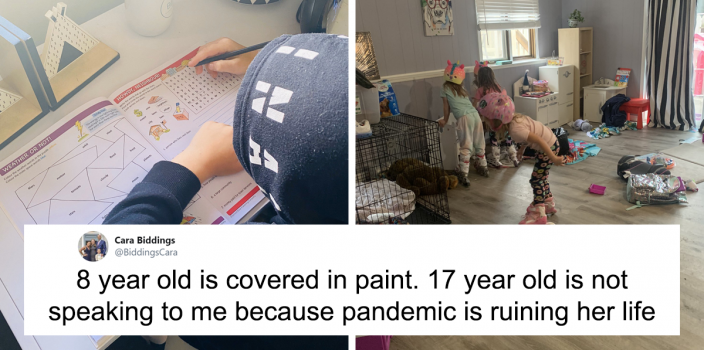
Two years before "Isolation" was released, Lennon shouted "I'm lonely! Want to die!" on "Yer Blues." I'm definitely not there, but I am adapting to a new sort of loneliness. I'm thankful for my wife and my pups. I appreciate the virtual connectedness I have with others, but it is a pale substitute for the physical, human interactions I didn't know I'd miss until they were gone, like Thursday night trivia at my local dive bar. I want to stand outside my classroom between bells again, share the Jeopardy Clue of the Day with my colleagues, and joke with my students. The free and easy exchanges of "please" and "thank you" that occurred in restaurants and shops are either gone or given a new and tangible weight in today's circumstances, where buying groceries can be deadly.
When this is all over, I'd love to spend time in the Grenadines on David Geffen's 400 million dollar superyacht. But I wouldn't want to be stuck on it while the rest of my life was put on hold. For now, all of us still shop, celebrities in nicer stores, with a new distance that can't be measured in arm-lengths. The situation, not the setting, is what makes "Isolation" so heavy.
- Published on
I had "Don't Stand So Close to Me" by the Police, which is about social distancing, but not the kind we're tasked with now. "Fever" by Peggy Lee made the cut, as did "You Sound Like You're Sick" by the Ramones. There was "Cough Syrup" by Young the Giant, and "Can't Feel My Face" by the Weeknd. "Keep Your Hands to Yourself" by the Georgia Satellites was suggested by my wife, and I started things off with "Time to Get Ill" by the Beastie Boys. When it was all done, my playlist looked a lot like others I would see on social media as people sought not to minimize the virus, but to make it manageable; approachable even, until it blew over.
As much as I like to use music and humor as masks to diffuse and deflect, it became clear to me after a week in lock down that many of the songs I had chosen weren't appropriate given the gravity of the situation. I still believe we need music and humor, most especially in times like these. But as it became more and more evident that a lot of people were going to get sick, maybe even ones I cared about, having a song from the same album as "Fight for Your Right" -- especially when spring breakers were ignoring social distancing recommendations in the name of partying while people in New Rochelle were virtually walled in -- didn't seem appropriate at all.
That doesn't mean the virus killed music for me. It's just that other songs that seemed like a better fit for what was happening began playing in my head. These songs don't have anything to do with the coronavirus, or illness of any kind as far as I know, and only one is from the list I made BCE (before corona exploded). They are not the end of a playlist, but the beginning of a soundtrack.
In movies, songs can be allusions designed to tune the viewer into a specific frequency. How else do you explain why Quentin Tarantino used "Cat People," a song David Bowie recorded in 1982, during a pivotal scene in Inglourious Basterds, a movie set during World War II? They can reinforce the importance of an action or event the way "Bellbottoms" by The Jon Spencer Blues Explosion does at the beginning of Edgar Wright's Baby Driver. On film, songs often accent or expand on a scene's emotional heft, be it joy, sadness, fear, or excitement. We seem to be living in a movie, though what kind remains to be seen.
My COVID-19 soundtrack is made up of songs that, when I hear them after all of this is over, will be linked to this moment when the world cocooned. I'll be presenting them in a series of posts, in no particular order, starting with...
"DOLPHINS" - AZTEC CAMERA
So when news reports from sources like The Guardian and the London Evening Standard began reporting that dolphins were returning to Venetian canals two things happened: I shared the story, and I listened to this song. Originally released by folk singer Fred Neil in 1967, "Dolphins" has been recorded by Tim Buckley, Linda Rondstadt, and even the Black Crowes. I first came to know it via this live version released by Roddy Frame in 1991, and it's my favorite of all the versions I've heard. It's a song about the potential of having your faith in the world restored by nature, by the sight of dolphins gliding through the sea. It's about the possibility that maybe on the other side of that lonely ocean there's someone on a shore thinking about you.
Andrew O'Hehir, writing for Salon, explained how "one of the most widely repeated silver-lining stories of the global coronavirus pandemic turns out to be -- not fake exactly, but partly mythical, the result of a single tweet, drawn from fragments of disconnected evidence, that went around the world at lightning speed and launched dozens of thinly-sourced articles." It was an old fashioned game of telephone in the midst of a very modern #pandemic. Short of just debunking the story, O'Hehir went on to identify why it resonated and spread so quickly prior to being properly fact checked: because we needed it to.
Right now waiting isn't enough, especially since that's essentially what we've been asked to do. So we use the power of story to create fact from fiction and we call it hope. We celebrate and share reports of dolphins and drunken elephants that, in the end, turn out to be less than accurate. Why? Because our need to search can carry us when our legs can't (or when they shouldn't, as is the case for those of us being told to stay home). Anyone who has ever looked for Santa as a kid knows just how tangible the things we hope for but never see can be.
Roddy Frame said that "Dolphins" was a song about human nature, and that at least is true. Everyday during this pandemic people are going on fruitless searches and facing down false hopes ("It's one person coming in from China, and we have it under control. It's going to be just fine”). That doesn't mean we should give up on what's possible, and that's why "Dolphins" resonates with me. Searching is sustainable. It's one thing we can do when we can't do anything else. Even if there are no dolphins currently swimming in the Canale Grande, the waters are clearer than they've been in a long time. That makes looking easier.
- Published on
Prodigal's Chair has been in hibernation, but it's spring, and I'm not teaching (not really, though I'm trying) and COVID-19 is wrecking everything so I'm coming out of my digital cave. Not everyone will appreciate what I have to write. I may be accused of the pulling a Wonder Woman. "Why," people will ask, "do you think anyone should be interested in what you have to say right now?! People are dying!" And it's true. On the whole, I'm in great shape. I'm healthy, as are the people I care about. I am still receiving a paycheck. I have toilet paper.
Blogging right now sorta smacks of hubris. Imagine...
But I miss people. I miss my students. I miss the colleagues I work and laugh with every day. So this is an effort to reach out. To stretch my legs. In the interest of social-distancing, I'll not be writing a targeted arrow of an essay that reaches some sort of profoundly sharp and cutting point, and in deference to the times, I'll not be taking submissions for a "Virus Issue." This will be more like the ambling walks I've been taking lately, dictated by what's around, with a few tentative steps in the street to preserve an invisible moat the virus (hopefully) can't cross. This will be casual, yet pleasant, depending on the weather.
The etiquette of walks is changing. I read a post on social media by someone who was upset with a jogger who passed them from behind. He ran too close too suddenly. He should have worn a bell, the post said, or maybe carried a bike horn. In this viral age, walkers are birds, and joggers are dangerous cats. I get annoyed with couples who think it's okay to walk side by side, even when someone else is approaching from the opposite direction. Why should I have to push out an extra three feet into traffic because you bitches can't stroll front to back for a few heartbeats? It's not like I'm asking you to get divorced. Mostly, though, people are friendlier. They wave heartily and wear big smiles, whereas you'd only get a slight nod before. It's as if they're wanting to let you know that their move across the street when they see you coming isn't personal. I'll be a little deflated when things get back to normal.
There's fear on my walks, now. There's fear everywhere, though, punctuated by the absurd. In fact, for me this pandemic is mostly about absurdity. We get a daily dose of it every time the President opens his mouth, as this ad Mr. Trump is trying to silence points out:
Then again, maybe "absurd" isn't really the right word -- for Trump's response, yes -- but not for the other things I've described. These things would definitely be absurd under normal circumstances, but things are not normal. The absurd has become both reasonable and required, in many cases, in order to protect and preserve people's health and the common good. It's a duality Shakespeare would love because "fair is foul, and foul is fair."
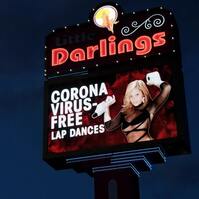
So here's a quiz: Which of the following is not an example of the "absurd"?
- Closing beaches and schools in the midst of a pandemic
- Denying states access to critical resources during a pandemic because their governors didn't ask nicely
- A strip club staying open and offering "corona virus-free lap dances" during a pandemic
Let's turn the corner. Does everyone else spend most of their time thinking about what other people are doing to fill theirs? It seems like it, based on social media. On Facebook people want to know how many places their friends have visited (I've been to more than some, less than others). They want to know if you've seen a band live for every letter of the alphabet (Nope! I'm short E, of all letters, and Q, X, and Z). They want to know if you're good at math (the answer is 30). These are exchanges that require give and take; and, like Zoom meetings, they have become more commonplace than speaking face-to-face. I'm also curious about which song was number one on your 12th birthday, but I think about other things, too.
I think about my former students who were freshmen when I started my current job and have seen their senior year disrupted and potentially cut short. I hope they know that, regardless of how the rest of their year goes, COVID-19 cannot diminish what they've accomplished.
I hope the restaurants and the other small businesses in my community that have been figuratively infected by the coronavirus can survive. I want them to know that I'll be there when they reopen.
I miss sports. Liverpool was just two wins away from lifting the Premier League trophy, and March was still mad, but for reasons most of us never saw coming. There will be no Olympics this summer, and maybe no baseball.
It sucks that bands I've been looking forward to seeing have had to reschedule their shows or have canceled them outright. I hope these small, indie artists like Caroline Rose, the Michigan Rattlers, and Hinds can survive until they can tour again.
I hope Nashville rises, knowing that the town was reeling from deadly tornadoes before the pandemic hit.
I think about my daughter.
I want everyone to stay safe and alive.
What are you thinking about?
If you're interested in sharing, email me. Let's get through this together.